



ACMT Position Statement: Preventing Occupational Opioid Exposure to Emergency Responders
ACMT Position Statement: Preventing Occupational Opioid Exposure to Emergency Responders
November 11, 2025
Andrew Stolbach, MD, MPH; Jon B Cole, MD; Christopher Hoyte, MD, MBA; Emily Kiernan, DO; Maryann Mazer-Amirshahi, PharmD, MD, MPH, PhD; Charles McKay, MD; Michael Moss, MD; Lewis Nelson, MD, MBA; Brandon Warrick, MD; Hannah L. Hays, MD
The position of the American College of Medical Toxicology (ACMT) and American Academy of Clinical Toxicology (AACT), is as follows:
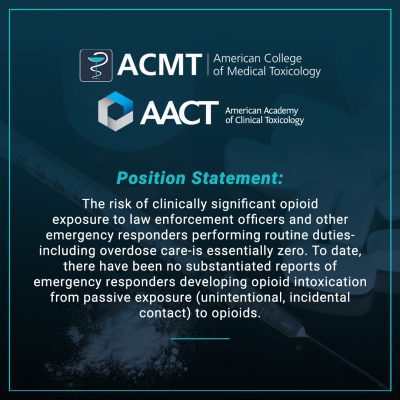
The risk of clinically significant opioid exposure to law enforcement officers and other emergency responders performing routine duties-including overdose care- is essentially zero. To date, there have been no substantiated reports of emergency responders developing opioid intoxication from passive exposure (unintentional, incidental contact) to opioids. Passive dermal exposure will not cause opioid intoxication. Emergency responders should avoid transferring material from hands or uniform to eyes, mouth, and nose. Incidental dermal exposures to opioids should be promptly washed with water. For emergency responders performing routine law enforcement duties or delivering medical care- including opioid overdose treatment- no respiratory protection or splash protection is needed. In exceptional circumstances where there are drug particles or droplets suspended in the air, an N95 respirator provides sufficient respiratory protection. Personnel with occupational exposure to opioids should be trained to recognize the signs and symptoms of opioid intoxication, have naloxone readily available, and be trained to administer naloxone. In the unlikely event of environmental opioid poisoning due to handling fentanyl (or any opioid), naloxone should be administered to those with hypoventilation. Naloxone should not be administered for non-specific signs or symptoms unlikely to be related to opioid toxicity such as dizziness, lightheadedness, or sudden muscular stiffening coupled with falling. Anxiety, tachycardia, tachypnea, and hyperventilation are not signs or symptoms of opioid poisoning. While individual practitioners’ perspectives may differ, these are the positions of American College of Medical Toxicology and American Academy of Clinical Toxicology at the time written, after a review of the issue and scientific literature.
Background
The US has been experiencing an unprecedented opioid crisis since the mid-1990s [1]. The age-adjusted rate of synthetic opioid-involved deaths (excluding methadone) increased 22-fold from 2013 to 2022 [2].
In 2017, ACMT and AACT published a position statement to address the perceived risk of occupational exposure to opioids. This position statement, which updates our previous document [3-4], addresses the risk of clinically significant exposure to emergency responders (law enforcement officers and prehospital medical providers) and others with passive exposure to opioids in performance of their routine duties. We focus on passive exposure, defined as unintentional, incidental exposure to an opioid. This statement considers exposure to all opioids, including synthetic opioids such as fentanyl, fentanyl analogs, and nitazenes. We realize that the presence of adulterants (e.g., xylazine, benzodiazepines, and stimulants) in the recreational drug supply could be perceived as risks but we do not consider these substances likely to result in harm from passive exposure because they produce less respiratory depression (if any at all) compared to opioids. Additionally, we have found no evidence to suggest any synergy or worsened outcome from passive exposure when these adulterants are present. The treatment of a mass casualty incident from opioids intentionally aerosolized for the purpose of terrorism is beyond the scope of this document.
Opioids are distributed illicitly in North America both as powders and counterfeit tablets of pressed powder. The purity of powder and tablets is typically <20% [5] and <5% [6], respectively. Recent work suggests that the prevalence of tablet use in overdose victims is rising dramatically [7-10]. The potency and variability of dose of synthetic opioids are the primary contributor to their risk and subsequent harm. Potency describes the dose of a drug required to cause a specific effect, such as pain relief, respiratory depression, or death. Fentanyl is 50–100 times more potent than morphine at the mu-opioid receptor [11-14] and carfentanil, a veterinary analgesic, is 10,000 times more potent than morphine (and 100 times more potent than fentanyl), although it produces less apnea when dosed therapeutically [12, 15-16]. Respiratory depression is the most consequential clinical effect of opioid intoxication and the cause of death in nearly all opioid-related fatalities.
By nature of their duties, emergency responders, including law enforcement officers and prehospital providers, encounter illicit opioids. In June 2016, the U.S. Drug Enforcement Agency (DEA) published a warning to law enforcement on the dangers of fentanyl intoxication from passive exposure. The video cautioned officers, “Don’t touch this stuff or the wrappings that it comes in without the proper personal protective equipment,” while showing a photograph of a person wearing a level A self-contained breathing apparatus [17-18]. This DEA warning, which was not substantiated by evidence, was followed by media reports suggesting that passive contact with opioids could cause intoxication [19].
Methodology
Our recommendations are based on a review of the available literature and the opinion and clinical experience of a task force of our members convened by the governing boards of ACMT and AACT. We solicited feedback from members during a public comment period. After revision by the task force, final approval was made by the ACMT Board of Directors and AACT Board of Trustees.
Inhalation Exposure Risk for Opioids
As a discussion of every opioid is not feasible, we use the chemical properties of fentanyl and selected fentanyl analogs as representative examples in this section and the following section.
Inhalation is an exposure route of concern for opioids when drug particles, either as a powder or solution, are suspended in the air. From a practical standpoint, this will rarely occur. Fentanyl has a very low vapor pressure (4.6 × 10⁻⁶ Pa), meaning it is not volatile and there is no appreciable gaseous phase under ambient conditions. [20] When fentanyl is inhaled, there is the potential for systemic absorption through the lungs due to its bioavailability of 12–100% [21-22]. In 2002, an airborne dispersal system was purportedly used by the Russian military to aerosolize a solution containing carfentanil and remifentanil to subdue hostage-takers in a Moscow theater [23-24]. During this event, at least 125 of 800 hostages died, primarily of opioid intoxication, although use of such a dispersion method is not representative of encounters with opioids in powder or tablet form nor under the passive conditions described above.
To put inhalational fentanyl exposure concerns into perspective, we evaluated published reports of airborne opioid concentrations in settings with potentially longer, more intense exposure. These included public areas with recreational use, supervised consumption sites, analytical laboratories, and drug manufacturing sites. In each of these settings, fentanyl exposure is minimal.
A Seattle study collected 78 air samples from 11 buses and trains-which are sites of frequent drug use- and tested for fentanyl. Although one sample exceeded an Environmental Protection Agency (EPA) occupational exposure guideline designed to be protective over eight hours of continued exposure, the authors concluded that the air concentrations were too low to cause acute, short-term physical health effects for the members of the public or transit operators [25].
At a supervised drug consumption site, the maximal airborne fentanyl concentration in a room where users had smoked fentanyl was 0.0859 mcg/m3 [26]. Even if the inhalation bioavailability of fentanyl was 100%, eight hours of exposure to fentanyl at this concentration would yield a total exposure dose of 0.29 mcg. A standard analgesic adult intravenous dose of fentanyl is 50-100 mcg.
A National Institute for Occupational Safety and Health (NIOSH) evaluation of fentanyl exposure in controlled substance laboratories found a maximum air fentanyl concentration of 0.04 mcg/m3 [27]. Workers involved in commercial manufacture of fentanyl were exposed to a mean of 0.036 mcg/m3 fentanyl [28]. At the highest single airborne concentration measured (13 mcg/m3), an individual exerting himself heavily for 20 minutes, such as while performing chest compressions, would inhale 10.4 mcg of fentanyl. This estimation assumes a minute ventilation of 40 L/min, which is 4-5 times higher than what is expected of individuals at rest or during light activity. This dose of fentanyl is unlikely to produce any clinically significant effect. Exposure during less strenuous physical activity, such as routine working conditions, would lead to even lower inhaled doses.
For emergency responders performing routine law enforcement duties or delivering medical care, including opioid overdose treatment, no respiratory protection is needed to prevent passive opioid exposure. In the unlikely event that fentanyl is suspended in the air, adequate protection is provided by an N95 respirator capable of filtering >95% of particles 0.3 microns in diameter, or P100 respirator capable of filtering >99% of particles 0.3 microns in diameter. Fentanyl smoke particles have a median particle diameter of 1.07 microns and minimum of 0.43 microns [29].
Ocular-Facial Exposure Risk for Opioids
Opioids can be absorbed through mucous membranes. Fentanyl exhibits greater than 30-fold absorption across mucous membranes compared to skin, which is protected by the stratum corneum [30]. Only one case report of possible unintentional intoxication by this route is published in the medical literature. A veterinarian was splashed in the eyes and mouth with contents of a dart containing 1.5 milligrams of carfentanil (the opioid equivalent of approximately 150 milligrams of fentanyl) and 50 milligrams xylazine. Despite immediately washing his face with water, he became drowsy within two minutes. No respiratory depression was reported. His condition improved following the administration of 100 milligrams naltrexone, and he demonstrated no subsequent signs of intoxication [31]. Analytical testing was not performed and the extent that these effects were a result of carfentanil or xylazine exposure is not clear.
For emergency responders performing routine law enforcement duties or delivering medical care, including opioid overdose treatment, no splash protection is needed unless it is needed for another reason, such as performing endotracheal intubation. Emergency responders should take care to prevent transfer of any material from hands or uniform to their eyes, mouth, and nose.
Dermal Exposure Risk for Opioids
Although fentanyl is amenable to transdermal absorption because of its low molecular weight and high lipophilicity, skin absorption is very slow [32-33]. Depending on the specific product, medical grade transdermal delivery systems (e.g., “patches”) take 3 to 13 h to produce a therapeutic serum fentanyl concentration [34-37]. Absorption of liquid or aqueous fentanyl increases with larger surface area of application, duration of application, application to non-intact skin, and increasing skin temperature. The physical properties of fentanyl analogs are expected to be similar to fentanyl, suggesting potential for dermal absorption. In a small volunteer study, sufentanil citrate in water applied to the forearm and covered by an occlusive dressing was absorbed comparably to fentanyl, although the exact bioavailability was not determined [35]. In vitro studies of both fentanyl and carfentanil dermal absorption demonstrate the robust barrier provided by the intact skin surface. Appearance of drug through the skin in typical chamber models required high doses of drug in solution (with no absorption of dry powder), continuous exposure (hours), and a lag time to appearance of 30 minutes to hours depending on experimental conditions [38-39].
Because of the slow dermal absorption of fentanyl, passive dermal absorption is extremely unlikely to cause opioid intoxication. As an example, if bilateral palmar surfaces were covered with fentanyl patches, once the peak rate of drug delivery was reached, it would take approximately 14 min to receive 100 mcg of fentanyl, using a body surface area of 17,000 cm2, a palm surface area of 0.5%, and fentanyl absorption of 2.5 mcg/cm2/h [37, 40]. This extreme example illustrates that even a high dose of fentanyl administered by a mechanism specifically designed for transdermal administration cannot rapidly deliver a clinically significant dose.
The above calculation is based on medical transdermal fentanyl patch data, which overestimates the potential exposure from opioid in tablet or powder form in several ways. Opioids must have sufficient surface area and moisture to be efficiently absorbed. Medicinal transdermal fentanyl patches use a matrix designed to optimize delivery, whereas tablets and powder require dissolution for absorption. Whereas powdered drug sits on the skin, patches have adhesive to hold drug in close proximity to the skin allowing both to remain moist. Finally, in the above example, 2.5 mcg/cm2/h represents delivery at steady state after the drug has penetrated the dermis and overestimates the amount of absorption in the first few minutes of dermal exposure. Dermal exposure to a significant dose of pharmaceutical fentanyl over a large skin surface area did not produce any clinical effects [41].
Based on our current understanding of the absorption of opioids, small unintentional skin exposures to fentanyl tablets or powder cannot cause significant opioid intoxication. For additional safety and good hygienic practice, gloves provide an effective added barrier. Washing exposed skin with water readily removes drug contamination from skin. In the past, we have recommended decontamination with water compared to hand sanitizer [3-4], but a skin transfer model [38] demonstrated that both ethanol and commercial hand sanitizer decreased dermal carfentanil penetration compared to water. An ex-vivo skin experiment found that soapy water was equivalent to water in removing fentanyl hydrochloride, but soapy water was superior in decreasing penetration of free fentanyl base [39]. Because skin absorption is so slow, we recommend skin irrigation with water, which is typically readily accessible. Soapy water, when available, is an excellent alternative.
Overview of Reports in Medical/Scientific Literature
In the medical literature, there are no cases of opioid intoxication from passive contact with opioids. A 2023 systematic review of the available literature identified 12 reports, including 10 NIOSH Health Hazard Evaluation Reports, encompassing 27 first responders with signs and symptoms after possible passive fentanyl exposure [42]. The authors concluded that symptoms and recorded physical findings of all patients were not consistent with opioid intoxication. The authors found one instance of an asymptomatic laboratory technician with detectable fentanyl urine concentration [42]. A review of a Canadian occupational illness surveillance system for opioid-related poisonings found no increased risk in the “medicine and health” occupations [43]. There was no category for emergency responders. This is consistent with our experience: individuals in the recreational drug trade and health care professionals do not develop opioid intoxication from passive exposure to patients with opioid overdose or from therapeutic administration of opioids.
Antidotal Therapy
Naloxone, a mu-opioid receptor antagonist, typically administered via intravenous, intramuscular, or intranasal routes, reliably reverses opioid-induced respiratory depression. The effective dose of naloxone depends on the patient’s weight, concentration of opioid at the receptor, and relative binding affinities at the mu receptor [14, 44]. Naloxone is extremely potent: 13 mcg/kg (or about 1 milligram in an 80 kg human) is sufficient to occupy 50% of opioid receptors in a human brain [45]. There is scant information on human and animal naloxone reversal of fentanyl analogs. Despite anecdotal reports [46] and theoretical arguments [47] that higher-than-usual doses may be necessary to reverse respiratory depression from fentanyl and analogs such as carfentanil, animal data suggest that standard doses of naloxone are sufficient [48-50]. Real-world support of this experimental observation is seen in an emergency department cohort, where similar doses of naloxone were required for reversal of patients with fentanyl and conventional opioid (e.g., heroin) overdoses [51].
The mu-opioid receptor antagonist nalmefene is available for administration by intranasal and intravenous routes. While nalmefene has a higher affinity for the mu opioid receptor than naloxone, there are limited data regarding its use in fentanyl overdose. Nalmefene has a longer duration of action and would also necessitate longer observation times to monitor for resedation as the antagonist effects wear off. Given these limitations, nalmefene should not be considered the first-line agent for opioid reversal until more robust data are available [52].
As previously stated, unintentional intoxication from passive exposure is extremely unlikely. We recommend naloxone administration only to those with objective opioid -induced hypoventilation after opioid exposure.
Media Reports
Unconfirmed media reports of opioid intoxication following passive opioid exposure date back to at least 2013 [53]. A 2020 study found 214 print articles in lay media between 2013 and 2018 that reported unintentional opioid exposures among first responders. None of these reports described a plausible route of exposure, clinical manifestations consistent with exposure, or laboratory testing that confirmed absorption of any drug [53].
Investigators compiled media articles on overdose risk from passive fentanyl exposure between 2015 and 2019 and evaluated social media shares of this content. They found 551 articles endorsing the concept of overdose risk from passive contact shared approximately 450,000 times, potentially reaching 70 million users. These reports received 15 times more social media visibility than the subsequent corrective content [54]. In other words, misinformed media reports garner far more attention than accurate information.
The Center for Just Journalism analyzed 326 news stories covering opioid exposures experienced by first responders and found that most relied on law enforcement sources while only 35 quoted medical experts [19]. These articles usually suggested that skin absorption was the route of exposure. The most common finding reported was lightheadedness, followed sequentially by abrupt loss of consciousness and difficulty breathing. In more than 85% of the articles, the prevailing implicit belief was that these symptoms resulted from passive fentanyl exposure.
Most articles describe signs, symptoms, and routes of exposure that are inconsistent with opioid intoxication and do not cite credible medical sources to present a corrective counter narrative. We propose several practices to improve media communication of these events to the public. A media report should only label a passive opioid exposure as confirmed opioid intoxication if there is a plausible route of exposure, clinical manifestations consistent with opioid intoxication, and ideally, laboratory confirmation of drug absorption in a biological specimen obtained from the exposed individual(s). A qualified medical expert should be asked to provide input and contextualize the report with clinical and scientific information.
Alternative Causation
Available reports of persons with symptomatic passive opioid exposure are not consistent with opioid intoxication. Commonly noted signs and symptoms in these scenarios include lightheadedness, rapid breathing, confusion, disorientation, dizziness, headache, and nausea [19]. These manifestations are subjective, difficult to objectively validate, and not consistent with opioid intoxication, which causes sedation and respiratory depression.
A credible alternative that is compatible with the clinical findings and exposure situations is a psychological response to the stress of the event. The “nocebo effect” is the antithetical counterpart to the placebo effect: the experience of negative effects due to expectations following an exposure [53, 55]. Under this hypothesis, the published reports and other communications enhance the likelihood of experiencing the nocebo effect due to the expectations set forth in the messaging. This transient physiological response is normal in highly stressful situations.
Wide dissemination of media reports describing people with symptomatic opioid exposure may predispose individuals to developing symptoms themselves. For example, in a study of subjects shown a film about the adverse effects of Wi-Fi, half of participants later experienced adverse effects when exposed to a sham Wi-Fi signal [56]. Presumed toxic exposures have caused numerous outbreaks of psychogenic illness, in which, despite extensive investigations, no medical cause could be identified [57-59]. In summary, media reports about suspected passive opioid intoxication may themselves contribute to the development of illness.
In the absence of clear signs of opioid intoxication, the resolution of clinical findings following naloxone administration does not confirm opioid intoxication. Naloxone can reverse symptoms of psychological stress via the placebo effect. Similarly, hospital evaluation of a person with reported passive opioid exposure should not be interpreted as confirmation of opioid exposure. Such medical care is usually offered precautionarily, before complete information is available. Additionally, healthcare providers that cared for the individual may not share details of the evaluation due to patient privacy requirements.
Guidance for Emergency Responders from Other Organizations
In addition to ACMT and AACT, several other organizations have issued guidance regarding occupational fentanyl exposure (See Table). Among organizations, there is consensus regarding treatment of individuals with opioid intoxication, use of personal protective equipment (PPE), and decontamination strategies.
The National Institute of Environmental Health and Sciences (NIEHS) offers additional resources regarding opioids in the workplace including training materials that include slides, handouts, and testing materials [60].
NIOSH provides recommendations for specific levels of PPE based on the agent, job (e.g., pre-hospital care, law enforcement), and “exposure level” [61]. Although helpful in concept, the risk level descriptions are overly conservative and may lead to unnecessary use of PPE. For example, the “moderate” exposure level includes prehospital personnel or law enforcement in situations where “small amounts” of drug liquid or powder are visible, which we would consider to be no-risk. In this situation, NIOSH recommends use of an N100/P100 mask and goggles, which we consider to be unnecessary because of the unlikelihood of absorbing any drug in this form.
NIOSH also provides guidance for large fentanyl exposures that may occur as part of a large-scale terrorism event, which can also result in occupational fentanyl exposures, but is beyond the scope of this document [62].
The Occupational Safety and Health Administration (OSHA) also offers guidance for a variety of different drug exposures in various workplace settings (e.g., hospital, first responders, laboratory staff) and recommendations for employee health evaluation [63]. One limitation of the OSHA guidance is the paucity of specific recommendations for opioids. They do, however, publish workplace accident reports online that involve fentanyl, which can be a potential source of exposure and outcome data.
TABLE
| NIEHS | Opioids & substance use: workplace prevention & response https://tools.niehs.nih.gov/wetp/index.cfm?id=2587 |
| NIOSH | Standard Operating Procedures https://www.cdc.gov/niosh/substance-use/fentanyl-emergency-responders/operating-procedures.html Potential Exposures and PPE https://www.cdc.gov/niosh/substance-use/fentanyl-emergency-responders/ppe.html Training and Decontamination https://www.cdc.gov/niosh/substance-use/fentanyl-emergency-responders/decontamination.html Fentanyl: Incapacitating Agent https://www.cdc.gov/niosh/ershdb/emergencyresponsecard_29750022.html Fentanyl: Personnel in Hospital and Clinical Settings https://www.cdc.gov/niosh/substance-use/fentanyl-healthcare-guidelines/index.html Illicit Drugs, Including Fentanyl: Preventing Occupational Exposure to Emergency Responders—Using Personal Protective Equipment https://www.cdc.gov/niosh/docs/video/2019-156/default.html |
| OSHA | Controlling Occupational Exposure to Hazardous Drugs https://www.osha.gov/hazardous-drugs/controlling-occex |
Table: Useful Websites for Additional Information and Training Materials
Abbreviations:
NIEHS = National Institute of Environmental Health and Science
NIOSH = National Institute for Occupational Safety and Health
OSHA = Occupational Safety and Health Administration
Recommendations
The American College of Medical Toxicology and American Academy of Clinical Toxicology recognize the challenges in issuing recommendations when available data are incomplete. These recommendations are written for emergency responders performing routine law enforcement duties or delivering medical care, but can be broadly applied to anyone under similar situations. (The treatment of a mass casualty incident from opioids intentionally aerosolized for the purpose of terrorism is beyond the scope of this document.)
We believe that recommendations should be protective of emergency responders, but not result in unnecessary delays in care to patients with time-sensitive conditions. We also recognize that PPE can interfere with task performance by emergency responders and law enforcement officials. We recognize that these are often harrowing situations, which require rapid empiric decision making. Due to the limited available data, the following recommendations primarily represent consensus expert opinion.
General Precautions and Management of Exposure
● Emergency responders who may encounter opioids should be trained to recognize the symptoms and objective signs of opioid intoxication, should have naloxone readily available, and should be trained to administer naloxone.
● For opioid intoxication to occur, the drug must enter the blood and brain from the environment. Intoxication cannot occur from simply being in proximity to a drug.
Dermal Precautions
● Incidental dermal exposure is exceedingly unlikely to cause opioid intoxication. For routine handling of drugs, exam gloves (e.g., disposable nitrile drugs) provide added dermal protection.
● Incidental dermal exposures to opioids should be promptly washed with water.
Respiratory Precautions/Splash Exposure
● For emergency responders performing routine law enforcement duties or delivering medical care (including opioid overdose treatment) no respiratory protection or splash protection is needed.
● Emergency responders should take care not to unintentionally transfer material from hands or uniform to eyes, mouth, and nose.
Naloxone Administration and Airway Management
● In addition to basic life support measures such as bag-mask ventilation, naloxone should be administered to those with objective signs of hypoventilation from opioid intoxication.
● Those with normal or increased respiratory rate, despite a depressed level of consciousness, do not need naloxone. Do not use mental status as a sole guide to administer naloxone.
● If hypoventilation persists following an initial naloxone dose and personnel with advanced airway training are not available, repeat naloxone until reversal of the depressed breathing occurs or 4 milligrams IV is administered (or 8 milligrams by IN route). Individuals with medical symptoms should be further evaluated by a medical clinician.
Disclaimer
While individual practitioners may differ, these are the positions of the American Academy of Clinical Toxicology (AACT) and the American College of Medical Toxicology (ACMT) at the time written, after a review of the issue and pertinent literature.
Sources of Funding
None.
Conflicts of Interest
None.
References
1. Laing R, Donnelly CA. Evolution of an epidemic: Understanding the opioid epidemic in the United States and the impact of the COVID-19 pandemic on opioid-related mortality. PLoS One. 2024 Jul 9;19(7):e0306395. doi: 10.1371/journal.pone.0306395. PMID: 38980856.
2. Centers for Disease Control and Prevention (CDC). Antibiotic Resistance Threats in the United States, 2019. Atlanta, GA: U.S. Department of Health and Human Services, CDC; 2019. Available from: https://dx.doi.org/10.15620/cdc:135849. Accessed 24 Jul 2025.
3. ACMT and AACT position statement: preventing occupational fentanyl and fentanyl analog exposure to emergency responders
Moss MJ, Warrick BJ, Nelson LS, McKay CA, Dubé PA, Gosselin S, Palmer RB, Stolbach AI. Clin Toxicol (Phila). 2018 Apr;56(4):297-300. doi: https://doi.org/10.1080/15563650.2017.1373782. PMID: 28872357.
4. ACMT and AACT Position Statement: Preventing Occupational Fentanyl and Fentanyl Analog Exposure to Emergency Responders
Moss MJ, Warrick BJ, Nelson LS, McKay CA, Dubé PA, Gosselin S, Palmer RB, Stolbach AI. J Med Toxicol. 2017 Dec;13(4):347-351. https://doi.org/doi: 10.1007/s13181-017-0628-2.
5. Drug Enforcement Administration. National Drug Threat Assessment 2024 [Internet]. Washington, DC: U.S. Department of Justice; 2024 May 23. Available from: https://www.dea.gov/sites/default/files/2025-02/508_5.23.2024%20NDTA-updated.pdf. Accessed 24 Jul 2025.
6. Kilmer B, Pardo B, Pujol TA, Caulkins JP. Rapid changes in illegally manufactured fentanyl products and prices in the United States. Addiction. 2022 Oct;117(10):2745-2749. doi: https://doi.org/10.1111/add.15942.
7. National and regional trends in fentanyl seizures in the United States, 2017-2023
Palamar JJ, Fitzgerald N, Carr TH, Cottler LB, Ciccarone D. Int J Drug Policy. 2024 May 3;104417. doi: https://doi.org/10.1016/j.drugpo.2024.104417.
8. Trends in characteristics of fentanyl-related poisonings in the United States, 2015-2021
Palamar JJ, Cottler LB, Goldberger BA, Severtson SG, Grundy DJ, Iwanicki JL, Ciccarone D. Am J Drug Alcohol Abuse. 2022 Jul 4;48(4):471-480. doi: https://doi.org/10.1080/00952990.2022.2081923. Epub 2022 Jun 15.
9. Over 115 Million Pills Containing Illicit Fentanyl Seized by Law Enforcement in 2023
National Institute on Drug Abuse (NIDA). 2024 May. Available from: https://nida.nih.gov/news-events/news-releases/2024/05/over-115-million-pills-containing-illicit-fentanyl-seized-by-law-enforcement-in-2023. Accessed 24 Jul 2025.
10. Fentalog Study Dashboard
Centers for Disease Control and Prevention (CDC). Available from: https://www.cdc.gov/overdose-prevention/data-research/facts-stats/fentalog-study-dashboard.html?CDC_AAref_Val=https://www.cdc.gov/drugoverdose/nonfatal/fentalog/dashboard/index.html?ACSTrackingID=USCDC_1026-DM106698&ACSTrackingLabel=Two%2520New%2520Dashboards%2520&deliveryName=USCDC_1026-DM106698. Accessed 24 Jul 2025.
11. Higashikawa Y, Suzuki S. Studies on 1-(2-phenethyl)-4-(N-propionylanilino)piperidine (fentanyl) and its related compounds. VI. Structure-analgesic activity relationship for fentanyl, methyl-substituted fentanyls and other analogues. Forensic Toxicology. 2008;26:1–5. https://doi.org/ doi: 10.1007/s11419-007-0039-1.
12. Janssen PA. Potent, new analgesics, tailor-made for different purposes. Acta Anaesthesiol Scand. 1982;26(3):262–268. https://doi.org/ doi: 10.1111/j.1399-6576.1982.tb01765.x.
13. Mather LE. Clinical pharmacokinetics of fentanyl and its newer derivatives. Clin Pharmacokinet. 1983;8(5):422–446. https://doi.org/ doi: 10.2165/00003088-198308050-00004.
14. Volpe DA, Mcmahon Tobin GA, Mellon RD, Katki AG, Parker RJ, Colatsky T et al. Uniform assessment and ranking of opioid Mu receptor binding constants for selected opioid drugs. Regul Toxicol Pharmacol. 2011 Apr;59(3):385-90. doi: https://doi.org/10.1016/j.yrtph.2010.12.007.
15. Wax PM, Becker CE, Curry SC. Unexpected “gas” casualties in Moscow: a medical toxicology perspective. Ann Emerg Med. 2003;41(5):700–705. doi: https://doi.org/10.1067/mem.2003.148.
16. Swanson DM, Hair LS, Strauch Rivers SR, Smyth BC, Brogan SC, Ventoso AD, Vaccaro SL, Pearson JM. Fatalities involving carfentanil and furanyl fentanyl: two case reports. J Anal Toxicol. 2017 Jul;41(6):498-502. doi: https://doi.org/10.1093/jat/bkx037.
17. Drug Enforcement Agency (DEA). DEA warning to police and public: fentanyl exposure kills [Internet]. 2016. Available from: https://www.youtube.com/watch?v=8MLsrleGLSw. Accessed 24 Jul 2025.
18. Drug Enforcement Agency (DEA). DEA warning to police and public: fentanyl exposure kills [Internet]. 2016. Available from: https://ndews.umd.edu/sites/ndews.umd.edu/files/DEA%20Fentanyl.pdf. Accessed 2024 Oct 11. Accessed 24 Jul 2025.
19. Siegel Z, Bennett L, Horton B, Stolbach AI. Fentanyl exposure: The spread of misinformation and the response to overdose risk. Just Journalism [Internet]. Available from: https://justjournalism.org/page/fentanyl-exposure. Accessed 24 Jul 2025.
20. Gupta PK, Ganesan K, Gutch PK, Manral L, Dubey DK. Vapor pressure and enthalpy of vaporization of fentanyl. J Chem Eng Data. 2008;53(3):841–845. doi: https://doi.org/10.1021/je7005067.
21. Hung OR, Whynot SC, Varvel JR, Shafer SL, Mezei M. Pharmacokinetics of inhaled liposome-encapsulated fentanyl. Anesthesiology. 1995;83:277–284. https://doi.org/ doi:10.1097/00000542-199508000-00007.
22. Mather LE, Woodhouse A, Ward ME, Farr SJ, Rubsamen RA, Eltherington LG. Pulmonary administration of aerosolised fentanyl: pharmacokinetic analysis of systemic delivery. Br J Clin Pharmacol. 1998;46:37–43. doi: https://doi.org/10.1046/j.1365-2125.1998.00035.x.
23. Nord-Ost: Russia's Medical Failure in the 2002 Crisis U.S. Army, Emergency Medicine Program, Penn State Hershey S. Milton Medical Center, Hershey, PA 17033, USA. U.S. Army, Transitional Year Program/Department of Medicine, Madigan Army Medical Center, Joint Base Lewis-McChord, WA 98431, USA. Mil Med. 2023;188(1):e1–e3. doi: https://doi.org/10.1093/milmed/usad467.
24. Analysis of clothing and urine from Moscow theatre siege casualties reveals carfentanil and remifentanil use
Riches JR, McIntyre IM, McLeod MD, et al. J Anal Toxicol. 2012;36(9):647–656. doi: https://doi.org/10.1093/jat/bks078 PMID: 23002178.
25. Baker MG, Beaudreau M, Zuidema C. Assessing fentanyl and methamphetamine in the air and on surfaces of transit vehicles. University of Washington School of Public Health; 2023.
26. Leung V, Lem M. Assessment of potential exposure risks from fentanyl residues on surfaces. Vancouver (BC): BC Centre for Disease Control; 2017. Available from: http://www.bccdc.ca/resource-gallery/Documents/Educational%20Materials/Epid/Other/BCCDC_fentanyl%20surface%20cleaning%20assessment%20report.pdf. Accessed 24 Jul 2025.
27. Broadwater KR, Jackson DA, Li JF. Evaluation of law enforcement agents’ potential exposures during a search and seizure operation involving fentanyl and other illicit drugs—Ohio. Cincinnati (OH): U.S. Department of Health and Human Services, Centers for Disease Control and Prevention, National Institute for Occupational Safety and Health; 2018. Report No.: HHE Report 2018-0090-3366. Available from: https://www.cdc.gov/niosh/hhe/reports/pdfs/2018-0090-3366.pdf. Accessed 6 May 2025.
28. Van Nimmen NFJ, Poels KLC, Veulemans HAF. Identification of exposure pathways for opioid narcotic analgesics in pharmaceutical production workers. Ann Occup Hyg. 2006;50:665–677.
29. Yadav SK, Swami D, Kumar P, Meena MK, Maurya CK, Gupta PK, Ganesan K, Jain AK, Bhattacharya R. Acute inhalation toxicity of smoke of fentanyl and its 1-substituted analogs in Swiss albino mice. Cell Mol Biol (Noisy-le-grand). 2014 Sep 10;60(3):1-9.
30. Roy SD, Flynn GL. Transdermal delivery of narcotic analgesics: pH, anatomical, and subject influences on cutaneous permeability of fentanyl and sufentanil. Pharm Res. 1990;7(8):842–847. doi: https://doi.org/10.1023/A:1015912932416.
31. George AV, Lu JJ, Pisano MV, Metz J, Erickson TB. Carfentanil—an ultra potent opioid. Am J Emerg Med. 2010;28(4):530–532. doi: https://doi.org/10.1016/j.ajem.2010.03.003.
32. Pastore MN, Kalia YN, Horstmann M, Roberts MS. Transdermal patches: history, development and pharmacology. Br J Pharmacol. 2015;172(9):2179–2209. doi: https://doi.org/10.1111/bph.13059.
33. Nelson L, Schwaner R. Transdermal fentanyl: pharmacology and toxicology. J Med Toxicol. 2009;5(4):230–241. doi: https://doi.org/10.1007/BF03178274.
34. Duthie DJ, Rowbotham DJ, Wyld R, Henderson PD, Nimmo WS. Plasma fentanyl concentrations during transdermal delivery of fentanyl to surgical patients. Br J Anaesth. 1988;60:614–618. https://doi.org/doi: 10.1093/bja/60.6.614.
35. Gourlay GK, Kowalski SR, Plummer JL, Cherry DA, Gaukroger P, Cousins MJ. The transdermal administration of fentanyl in the treatment of postoperative pain: pharmacokinetics and pharmacodynamic effects. Pain. 1989;37:193–202. doi: https://doi.org/10.1016/0304-3959(89)90130-9.
36. Miguel R, Kreitzer JM, Reinhart D, Sebel PS, Bowie J, Freedman G, et al. Postoperative pain control with a new transdermal fentanyl delivery system. A multicenter trial. Anesthesiology. 1995;83:470–477. doi: https://doi.org/10.1097/00000542-199509000-00005.
37. Highlights of Prescribing Information: Duragesic (fentanyl transdermal system) for transdermal administration. United States Food and Drug Administration 2025.
https://www.accessdata.fda.gov/drugsatfda_docs/label/2021/019813s081lbl.pdf. Accessed 24 Jul 2025.
38. Lent EM, Maistros KJ, Oyler JM. In vitro dermal absorption of carfentanil. Toxicol In Vitro. 2020;62:104696. doi: https://doi.org/10.1016/j.tiv.2019.104696.
39. Thors L, Öberg L, Forsberg E, Wigenstam E, Larsson A, Bucht A. Skin penetration and decontamination efficacy following human skin exposure to fentanyl. Toxicol In Vitro. 2020 Sep;67:104914. doi: https://doi.org/ 10.1016/j.tiv.2020.104914.
40. Rhodes J, Clay C, Phillips M. The surface area of the hand and the palm for estimating percentage of total body surface area: results of a meta-analysis. Br J Dermatol. 2013;169(1):76-84
41. Feldman R, Weston BW. Accidental Occupational Exposure to a Large Volume of Liquid Fentanyl on a Compromised Skin Barrier with No Resultant Effect. Prehosp Disaster Med. 2022 Aug;37(4):550-552. doi: https://doi.org/10.1017/S1049023X22000905.
42. Adams A, Maloy C, Warrick BJ. Does occupational exposure to fentanyl cause illness? A systematic review. Clin Toxicol (Phila). 2023 Sep;61(9):631-638. doi: https://doi.org/10.1080/15563650.2023.2259087.
43. Carnide N, Sritharan J, Song C, Kooshki F, Demers PA. Risk of opioid-related harms by occupation within a large cohort of formerly injured workers in Ontario, Canada: findings from the Occupational Disease Surveillance System. Occup Environ Med. 2024 Oct 23;81(10):507–514. doi: https://doi.org/10.1136/oemed-2024-109458.
44. Boyer EW. Management of opioid analgesic overdose. N Engl J Med. 2012;367(2):146–155. doi: https://doi.org/10.1056/NEJMra1202561.
45. Melichar JK, Nutt DJ, Malizia AL. Naloxone displacement at opioid receptor sites measured in vivo in the human brain. Eur J Pharmacol. 2003 Jan 17;459(2-3):217–9. doi: https://doi.org/10.1016/s0014-2999(02)02872-8.
46. Gussow L. Who said the opioid crisis couldn’t get any worse? Emerg Med News. 2016;38(11):1–29. doi: https://doi.org/10.1097/01.EEM.0000508281.75514.70.
47. Moss RB, Carlo DJ. Higher doses of naloxone are needed in the synthetic opioid era. J Med Toxicol. 2019 Mar;15(1):56–59. doi: https://doi.org/ 10.1007/s13181-019-00756-0.
48. Moresco A, Larsen RS, Sleeman JM, Wild MA, Gaynor JS. Use of naloxone to reverse carfentanil citrate-induced hypoxemia and cardiopulmonary depression in Rocky Mountain wapiti (Cervus elaphus nelsoni) J Zoo Wildl Med. 2001;32(1):81–89. doi: https://doi.org/10.1638/1042-7260(2001)032[0081:UONTRC]2.0.CO;2.
49. Cole JB, Nelson LS. Controversies and carfentanil: We have much to learn about the present state of opioid poisoning. Am J Emerg Med. 2017 Nov;35(11):1743–5. doi: https://doi.org/10.1016/j.ajem.2017.08.045.
50. Kim HK, Connors NJ, Mazer-Amirshahi ME. The role of take-home naloxone in the epidemic of opioid overdose involving illicitly manufactured fentanyl and its analogs. Expert Opin Drug Saf. 2019 Jun;18(6):465–75. doi: https://doi.org/10.1080/14740338.2019.1613372.
51. Carpenter J, Murray BP, Atti S, Moran TP, Yancey A, Morgan B. Naloxone dosing after opioid overdose in the era of illicitly manufactured fentanyl. J Med Toxicol. 2019 Dec;15(4):314–320. doi: https://doi.org/10.1007/s13181-019-00735-w.
52. Stolbach AI, Mazer-Amirshahi ME, Nelson LS, Cole JB. Nalmefene should not replace naloxone as the primary opioid antidote at this time. Clin Toxicol (Phila). 2023;61(8):1–3. doi: https://doi.org/10.1080/15563650.2023.2212345.
53. Herman PA, Brenner DS, Dandorf S, Kemp S, Kroll B, Trebach J, Hsieh YH, Stolbach AI. Media reports of unintentional opioid exposure of public safety first responders in North America. J Med Toxicol. 2020 Apr;16(2):112–115. doi: https://doi.org/10.1007/s13181-020-00762-y.
54. Beletsky L, Seymour S, Kang S, Siegel Z, Sinha MS, Marino R, Dave A, Freifeld C. Fentanyl panic goes viral: The spread of misinformation about overdose risk from casual contact with fentanyl in mainstream and social media. Int J Drug Policy. 2020 Sep 16;86:102951. doi: https://doi.org/10.1016/j.drugpo.2020.102951.
55. Winograd RP, Phillips S, Wood CA, Green L, Costerison B, Goulka J, Beletsky L. Training to reduce emergency responders' perceived overdose risk from contact with fentanyl: early evidence of success. Harm Reduct J. 2020 Aug 24;17(1):58. doi: https://doi.org/10.1186/s12954-020-00402-2.
56. Pravata VM, Omelková M, Stavridis MP, Desbiens CM, Stephen HM, Lefeber DJ, Gecz J, Gundogdu M, Õunap K, Joss S, Schwartz CE, Wells L, van Aalten DMF. An intellectual disability syndrome with single-nucleotide variants in O-GlcNAc transferase. Eur J Hum Genet. 2020 Jun;28(6):706–14. doi: https://doi.org/10.1038/s41431-020-0589-9.
57. Jones TF, Craig AS, Hoy D, Gunter EW, Ashley DL, Barr DB, Brock JW, Schaffner W. Mass psychogenic illness attributed to toxic exposure at a high school. N Engl J Med. 2000 Jan 13;342(2):96–100. doi: https://doi.org/10.1056/NEJM200001133420206.
58. Small GW, Feinberg DT, Steinberg D, Collins MT. A sudden outbreak of illness suggestive of mass hysteria in schoolchildren. Arch Fam Med. 1994 Aug;3(8):711–6. doi: https://doi.org/10.1001/archfami.3.8.711.
59. Shewell J. The activity of different steroids in producing thymic involution. Br J Pharmacol Chemother. 1957 Jun;12(2):133–9. doi: https://doi.org/ 10.1111/j.1476-5381.1957.tb00111.x.
60. National Institute of Environmental Health Sciences. Fentanyl exposure prevention and response resources. Available from: https://tools.niehs.nih.gov/wetp/index.cfm?id=2587. Accessed 24 Jul 2025.
61. Centers for Disease Control and Prevention. Personal protective equipment for fentanyl emergency responders. Available from: https://www.cdc.gov/niosh/substance-use/fentanyl-emergency-responders/ppe.html. Accessed 24 Jul 2025.
62. Centers for Disease Control and Prevention. Fentanyl emergency responders resources. Available from: https://www.cdc.gov/niosh/substance-use/fentanyl-emergency-responders/index.html. Accessed 24 Jul 2025.
63. Occupational Safety and Health Administration. Controlling occupational exposure to hazardous drugs. Available from: https://www.osha.gov/hazardous-drugs/controlling-occex. Accessed 24 Jul 2025.