



ADLM Guidance Document on Laboratory Support for Targeted and Comprehensive Toxicology Testing for the Emergency Department
ADLM Guidance Document on Laboratory Support for Targeted and Comprehensive Toxicology Testing for the Emergency Department
Authors:
Patrick B. Kyle, PhD, University of Mississippi Medical Center, Jackson, MS
Uttam Garg, PhD, Children’s Mercy Hospitals and Clinics, Kansas City, MO
Paul J. Jannetto, PhD, Mayo Clinic, Rochester, MN
Frederick G. Strathmann, MBA, PhD, MOBILion Systems, Chadds Ford, PA
David J. Vearrier, MD, University of Pennsylvania, Philadelphia PA
Christine L. H. Snozek, PhD, Mayo Clinic Arizona, Phoenix, AZ
Outline
Introduction
1. What are the most common agents involved in toxic exposures?
2. When should toxicology testing be performed and what tests should be available?
3. What is the role or utility of point-of-care testing?
4. What degree of test utilization support should be expected?
5. What roles could data-sharing play in toxicology test development, performance, and patient care?
6. What responsibilities do laboratories have for staying up to date on potential sources of inaccuracy or performing their own studies?
7. What quality expectations should be in place for testing that claims to provide unknown compound identifications where analytical standards or previous reports are lacking?
8. What new and emerging biomarkers are of interest and why?
9. What new technologies are of interest for impacting existing unmet needs or addressing the tiered structure recommendations?
Conclusions
References
Introduction
Toxicology testing can aid in the management of patients suffering from acute and chronic toxicities. This guidance document provides laboratory testing recommendations for agents commonly responsible for patient presentations in the emergency department (ED) such as volatile alcohols, pharmaceuticals, pesticides, gases, heavy metals and others. Recommendations for testing of drugs of abuse (aka recreational drugs) are covered in the guidance document entitled “ADLM Guidance Document on Laboratory Testing for Drugs of Misuse to Support the Emergency Department” (1).
This document addresses the most common agents involved in toxic exposures and presents resources laboratories and clinicians may use to stay abreast of public health threats or regional patterns of toxic exposures. These recommendations are not intended to address every substance or every situation that would prompt emergency care, but rather to provide baseline recommendations for testing that may serve as a framework for discussion between laboratorians and ED clinicians. These recommendations are not intended to address forensic toxicology testing or chain of custody collection as they are generally not a part of routine ED workflows. As always, communication between the clinical laboratory, ED, and other experts such as medical toxicology, is emphasized. These entities should work together to structure test menus that best meet clinical needs of the local and/or regional patient population. Laboratory directors should continually strive to educate clinical providers on test recommendations, assay limitations, and interpretation of results.
1. What are the most common agents involved in toxic exposures?
Over two million potentially toxic human exposures were documented from 55 poison control centers across the US in 2024 (2). These poison control centers, collectively referred to as America’s™ Poison Centers, respond to telephone calls from homes, industrial sites and hospitals and provide management recommendations. The poison control centers emphasize exposure management, accurate data collection and patient treatment and maintain an enormous database of over 83 million case records. Key data such as location, age, reported toxic agents, route of exposure and outcome of each case are uploaded to the National Poison Data System (NPDS) database in an average of 4.97 minutes (2), which provides near real-time data that is searchable. In 2024, US Poison Centers responded to 2,092,689 human exposures, 92% of which occurred in a home, and 30.6% were referred to a health care facility (2). Males comprised most exposures in those <12 years of age, whereas females comprised the majority of exposures >12 years of age. Over forty six percent (46.1%) of cases involved children ≤ 12 y/o, 44.6% involved adults ≥ 20 y/o, and 8.5% involved teens from 13-19 years. Ingestions comprised 82% of exposures and 78% of exposures were unintentional, including therapeutic errors and unintentional overdoses. Over ten percent of cases involved multiple drugs.
The top 10 categories of substances most frequently involved in human exposures reported to poison control centers comprised 52.2% of the total number of calls and included: analgesics (10.53%), household cleaning substances (6.94%), antidepressants (5.50%), cardiovascular drugs (5.12%), cosmetics/personal care products (4.96%), antihistamines (4.63%), sedative hypnotics/antipsychotics (4.37%), foreign bodies/toys/miscellaneous (3.92%), stimulants and street drugs (3.14%) and dietary supplements/herbals/homeopathic (3.07%), and stimulants and street drugs (3.16%) (2). Table 1 provides more detail on the agents commonly involved in such exposures.
| Individuals aged < 20 years | Individuals aged ≥ 20 years |
| Ibuprofen | Ethanol |
| Melatonin | Benzodiazepines |
| Foreign Bodies | Atypical Antipsychotics |
| Diphenhydramine | Beta Blockers |
| Acetaminophen | Acetaminophen |
| Cetirizine | Bleach Products |
| Multivitamins | Ibuprofen |
| Diaper Products | Trazodone |
| Hand Sanitizers | Gabapentin |
| Systemic Antibiotics | Diphenhydramine |
| Desiccants | Unknown/Unidentified Drugs |
| Bleach Products | Bupropion |
| Food Products | Calcium Channel Blockers |
| Creams/Lotions | Hydroxyzine |
| Toys | Pyrethroid Insecticides |
| Atypical Antipsychotics | Systemic Antibiotics |
| Sertraline | Carbon Monoxide |
| Expanding Water Beads | Antihyperlipidemics |
| Laxatives | Sertraline |
| Laundry Detergents | Food Products |
Table 1. Top 20 agents involved in potentially toxic exposures of young (left) and older (right) individuals as published by the National Poison Data System (reference: Mississippi Poison Control Center, 2025).
In 2023 there were an estimated 7,590,202 drug-related ED visits in the USA, a rate of 2,226 drug-related visits per 100,000 individuals (3). The Drug Abuse Warning Network (DAWN) is a recently discontinued nationwide public health surveillance system that collected and reported data on drug-related ED visits. The data was captured directly from the electronic medical records of 53 sentinel hospitals across the US (3). The DAWN only reported substances from the following categories: alcohol, illicit drugs, prescription medications, over-the-counter medications (OTCs), dietary supplements, non-pharmaceutical inhalants, and substances that were vaped. Of over 7 million drug-related ED cases in 2023, 71.6% were 26-64 y/o patients, 11.3% were 18-25 years old and 5.4% were patients less than 18 years old. The top substances/groups recorded by the sentinel hospitals included: alcohol (41%), cannabis (11.8%), opioids (11.6%), methamphetamine (7.2%), unknown drug (5.5%), cocaine (4.7%), benzodiazepines (2.5%), antidepressants (2.2%), antipsychotics (1.3%), anticonvulsants (1.8%), and medications for opioid use disorder (1.7%). Of the drug-related ED cases in 2023, 21.6% involved more than one substance (3). Table 2 lists the top 20 compounds one group detected in a cohort of 6,447 pediatric patients presenting for suspected toxic ingestions (4).
| Ages 0-17 Years (N=6,447) | Number Positive | Percent Positive |
| Caffeine | 2403 | 37.3% |
| Nicotine | 1252 | 19.4% |
| Carboxy-THC | 1220 | 18.9% |
| Diphenhydramine | 823 | 12.8% |
| Acetaminophen | 782 | 12.1% |
| Levetiracetam | 355 | 5.5% |
| Citalopram | 307 | 4.8% |
| Fluoxetine | 279 | 4.3% |
| Sertraline | 263 | 4.1% |
| Lidocaine | 253 | 3.9% |
| Dextromethorphan | 188 | 2.9% |
| Ibuprofen | 170 | 2.6% |
| Ondansetron | 169 | 2.6% |
| Methylphenidate | 164 | 2.5% |
| Fentanyl | 157 | 2.4% |
| Oxcarbazepine | 150 | 2.3% |
| Quetiapine | 145 | 2.2% |
| Ketamine | 122 | 1.9% |
| Bupropion | 122 | 1.9% |
| Doxylamine | 114 | 1.8% |
Table 2. Top 20 drugs detected in children aged 0-17 years who presented for suspected toxic ingestions. THC: tetrahydrocannabinol.
Drug overdose is a leading cause of unintentional deaths in the US in individuals aged 1-44 years (5) and overdose deaths have increased significantly in the US over the past ten years (6). In 2023, 105,007 individuals died from drug overdose with the highest death rates involving adults 35-44 years of age. From 2020 to 2023 the rate of overdose deaths involving synthetic opioids other than methadone increased 200%, whereas during the same period the rate of overdose deaths involving heroin decreased 59% (6). A recent report of ED visits involving suicide attempts in 2021 and 2022 cited the following substances being involved: alcohol (24%), antidepressants (20%), acetaminophen (16%), benzodiazepines (12%), ibuprofen (10%), antipsychotics (8%), anticonvulsants (8%) and antihistamines (6%) (7).
It has been widely observed that drug trends vary by region and/or time. As an example, many countries reported toxic exposures from synthetic cannabinoids between 2014 and 2020. More recently, xylazine, a drug only approved for veterinary use has become a significant public health issue in the US (8). The number of overdose deaths involving xylazine increased from 102 in 2018 to 3,468 in 2021 (8). As of March 2023, fentanyl mixed with xylazine had been found in drug seizures in 48 US states (9). More recently the unregulated psychotropic agents kratom and tianeptine were identified as public health concerns (2).
Given constantly evolving drug trends, laboratories should seek to stay informed on local as well as national patterns. The introduction of a new compound into the local drug supply can rapidly change a city’s environment from normalcy to chaos (10). Local EDs could be inundated with cases, and unless staff are aware of current trends, their clinicians and toxicologists could be clamoring for laboratory testing to answer clinical questions (11). Staying abreast of regional and national trends allows the laboratory to identify testing options, and ideally procure analytical standards and/or develop analytical methods in order to be prepared for local outbreaks.
Recommendations:
- Clinical laboratories should use available resources to conduct systematic evaluations of trends involving toxic exposures on both the local and national levels. These could include CDC Morbidity and Mortality Weekly reports (MMWR), Drug Abuse Warning Network (DAWN) data, US DEA Public Safety Alerts, the National Poison Data System, and reports from public health and local reference laboratories as described in the following sections.
- Clinical laboratories should communicate their evaluations of drug intoxication trends to local emergency department physicians, and seek input on what testing might best support current emergency practice.
2. When should toxicology testing be performed and what tests should be available?
In clinical practice, the need for toxicology testing often arises in patients presenting with altered mental status, seizures, coma, severe respiratory distress or gastrointestinal symptoms, and with a history suggesting exposure to substances beyond the classic recreational drugs, drugs of misuse and toxic alcohols. Most hospitals offer limited drug and ethanol testing. For patients who present with altered mental status and are being treated for or are suspected of ingestion, serum levels of relevant therapeutic drugs including digoxin, valproate, salicylate, lithium and acetaminophen should be performed. Additional drug testing may be requested but results may not be available in a timely manner or may even require send out to a reference laboratory, diminishing their utility in acute patient care. Therefore, arterial blood gases, a metabolic panel, electrocardiogram (ECG) assessment, and other commonly available tests can provide rapid insight into symptomatic patients (Table 3). Toxicology testing is discussed in detail below.
Table 3: Commonly available non-toxicology laboratory tests for the management of a poisoned patient
| Panel | Components |
| Arterial blood gases | Oxygen Saturation, Oxygen Partial Pressure, Carbon Dioxide Partial Pressure, pH, Bicarbonate, Base Excess |
| Co-Oximetry | Oxyhemoglobin, Carboxyhemoglobin, Methemoglobin |
| Electrolytes | Sodium, Potassium, Chloride, Calcium, Magnesium, Phosphorus, Bicarbonate |
| Basic Chemistries | Albumin, Glucose, Lactate, Creatine Kinase, Total Protein, Osmolality, Osmolal Gap, Anion Gap, Iron, β-hydroxybutyrate |
| Renal Function Tests | Blood Urea Nitrogen (BUN), Creatinine, Estimated Glomerular Filtration Rate (eGFR) |
| Tests Evaluating Liver Function or Injury | Aspartate Aminotransferase (AST), Alanine Aminotransferase (ALT), Alkaline Phosphatase, Albumin, Bilirubin, Lactate Dehydrogenase, Gamma Glutamyl Transpeptidase (GGT), Total Protein, International Normalized Ratio (INR) |
| Complete Blood Count | Erythrocytes, Leukocytes, Hemoglobin, Hematocrit, Platelets |
| Urinalysis | Glucose, Ketones, pH, Specific Gravity, Nitrite, Leukocyte Esterase, Bilirubin, Urobilinogen, Protein, Erythrocytes, Leukocytes, Bacteria, Yeast, Casts, Crystals |
| Coagulation Tests | INR, Prothrombin Time, Activated Partial Thromboplastin Time |
Test Availability and Interpretation
The clinical laboratory plays an essential role in the management of critically poisoned patients. A wide variety of laboratory tests can be carried out to support poisoned patients in an ED. Effective communication between the ED and the laboratory regarding the availability of laboratory tests and anticipated turnaround times is crucial because no single laboratory can perform the full spectrum of toxicological tests (12, 13). Given the recent data on the most common overdoses and intoxications (2, 7), states, provinces, and territories should maintain regional toxicology laboratories with broad capabilities. US laboratories should become familiar with the public health Laboratory Response Network for Chemical Threats (LRN-C) program with capability to detect and/or quantify a number of agents such as toxic metals and gases. Laboratory testing to support the management of critically poisoned patients can vary significantly among medical facilities and, depending on availability and urgency, laboratory testing can be categorized into two broad tiers (13, 14).
Tier 1 Testing
Tier 1 involves tests that are typically performed on automated analyzers. These tests are recommended on a stat basis to support the ED and have a significant impact on the care of a poisoned patient. These tests include general laboratory tests such as electrolytes, blood gases, glucose, lactate, urinalysis, anion gap, osmolality, osmolal gap, complete blood count with hemoglobin, coagulation tests, etc. (see Table 3), as well as specific toxicology and therapeutic drug assays as noted in the sections below. The turnaround times for these assays should be within 30 to 60 minutes. It should be recognized that specific tests in laboratory menus may vary based on local capabilities and clinical needs.
Tier 2 Testing
Tier 2 tests may be available on-site but often do not have a significant impact on the immediate care of a poisoned patient. Some Tier 2 tests may be performed on automated analyzers with fast turnaround times, while others may have slower turnaround times due to requirements for specialized instruments and/or processing. This category of tests also includes send-out tests with a turnaround time of several days. Tests in Tier 2 are generally performed to confirm a specific exposure or for broad-spectrum drug screening employing complex laboratory methods (15-18).
Categories of different compounds within Tiers 1 and 2 are discussed below and summarized in Table 4.
Antipyretic, analgesics and anti-inflammatory drugs
These drugs include acetaminophen (N-acetyl-p-aminophenol, also known as paracetamol) and non-steroidal anti-inflammatory drugs (NSAIDs) like acetylsalicylic acid (aspirin), ibuprofen (Advil®) and naproxen (Aleve®) (19). More potent prescription analgesics include opioids such as morphine, oxycodone, codeine, hydrocodone, and fentanyl. Acetaminophen and acetylsalicylic acid testing in serum or plasma are considered Tier 1 assays. Testing for other NSAIDs such as ibuprofen and naproxen is generally not available or necessary, as blood concentrations are not useful in emergency management.
Acetaminophen is a widely used pain and fever reliever, especially in pediatrics due to concerns about Reye’s syndrome linked to acetylsalicylic acid (ASA). It is a relatively safe drug when used as prescribed. Acetaminophen toxicity results from improper overuse especially in individuals with impaired liver function or when an acute overdose occurs. Liver failure is the primary concern with acetaminophen overdose. Since there is an effective antidote, N-acetylcysteine (NAC), to treat acetaminophen overdose, it is crucial to measure drug concentrations in the serum or plasma (20). Acetaminophen levels help to determine if NAC is required, the duration of NAC therapy, and if other therapeutic interventions such as fomepizole and/or hemodialysis may be required.
Acetylsalicylic acid, commonly known as aspirin, is another antipyretic, analgesic and anti-inflammatory drug that is in common use. An overdose of aspirin initially results in respiratory alkalosis, followed by metabolic acidosis due to uncoupling of oxidative phosphorylation and lactic acidosis. Plasma or serum drug concentrations may be useful in assessing the extent of toxicity and treatment. Treatment often involves urine alkalization for moderate toxicity and dialysis for severe toxicity.
Opioids such as morphine, oxycodone, codeine, hydrocodone, and fentanyl are frequently prescribed for the management of pain. Overdoses with opioids resulting in emergency admissions are common. Typically, quantitative blood levels are not required when managing patients with opioid overdose. In instances of suspected opioid overdose, the patient is usually administered naloxone, a highly effective opioid antidote (21). A positive response to naloxone administration serves as confirmation of opioid overdose. If necessary, a urine qualitative test can help verify the ingestion of certain opioids (Tier 2).
Anticonvulsants
Anticonvulsants for which automated immunoassays are generally available include carbamazepine, phenytoin, phenobarbital and valproate (Tier 1) (22). Plasma or serum samples are used for the measurement of these drugs. The drug levels could be useful in drug overdose or for identifying sub-therapeutic levels in patients presenting with breakthrough seizures. While interferences have been reported, immunoassays for these drugs are generally specific, and the confirmation of drug levels by other more specific methods is not generally needed. There is no specific antidote for these drugs. In severe overdoses, the management involves providing symptomatic treatment or hemodialysis as therapeutic options. Other anticonvulsants for which routine automated immunoassays may not be available locally include topiramate, gabapentin, pregabalin, tiagabine, zonisamide, levetiracetam, oxcarbazepine and lacosamide (Tier 2) (19). Serum quantitative determinations are typically available for phenytoin and valproate and are useful to guide therapeutic interventions such as multiple-dose activated charcoal and hemodialysis, respectively. To determine the levels of other medications in this class, plasma or serum must often be sent to a reference laboratory although automated immunoassays are available for some. Liquid chromatography - tandem mass spectrometry (LC-MS/MS) is a preferred method for measurement of these drugs because it is both sensitive and specific (16-18).
Antidepressants and Antipsychotics
Commonly prescribed antidepressants include selective serotonin reuptake inhibitors (SSRIs such as fluoxetine, sertraline, paroxetine, escitalopram, citalopram and fluvoxamine), serotonin-norepinephrine reuptake inhibitors (SNRIs such as venlafaxine, desvenlafaxine and duloxetine), serotonin antagonists and reuptake inhibitors (SARIs such as trazodone and nefazodone), tetracyclic antidepressants (e.g., maprotiline, mirtazapine) and tricyclic antidepressants (TCAs such as amitriptyline, imipramine, doxepin, nortriptyline and desipramine) (19). Bupropion is an aminoketone antidepressant that is also prescribed for smoking cessation and may also be used recreationally. Overdose with bupropion can lead to cardiovascular and central nervous system toxicity, but assays for this drug are not commonly available (22).
While overdose from any antidepressant can cause serious toxicity, TCAs are the most concerning for acute toxicity. Due to safety concerns, TCAs are less commonly prescribed than in previous decades, but overdose can result in seizures, coma, and even death (19) (Tier 2). Determining the presence of TCAs can provide helpful information in patient management. However, urine TCA immunoassays are not recommended because they are prone to interferences. The ECG finding of QRS widening has been shown to correlate with TCA toxicity. Measurement of other antidepressants is generally not available on-site and is not needed for the management of a poisoned patient. These antidepressants can be measured in serum or plasma at a reference laboratory (Tier 2). Common methods for measurement of antidepressants are LC-MS(MS).
Antipsychotics include lithium, haloperidol, clozapine, olanzapine, quetiapine, aripiprazole and risperidone. Assays for lithium are available on automated chemistry analyzers (Tier 1). Symptoms of acute lithium toxicity include impaired consciousness, ataxia, tremor, choreoathetoid movements, seizures, cardiac dysrhythmias, and death. Therefore, serum or plasma lithium concentrations are useful in the management of an overdosed patient. Assays of other antipsychotics are generally not available on-site although immunoassays for some (e.g. clozapine) are available. Plasma or serum samples can be sent to a reference laboratory for assay of these drugs (Tier 2)
Cardiac Drugs
Commonly used cardiac drugs that may result in emergency admissions include digoxin, beta-blockers, calcium channel blockers and antiarrhythmics (22). Measurement of digoxin to support the ED is recommended as a specific treatment, digoxin-antibody, is available for digoxin overdose (Tier 1). Digoxin serum levels are helpful in determining the dose of digoxin-specific antibodies. Blood should be drawn before antibody administration as the antibody interferes with digoxin measurement by immunoassays. Measurement of other cardiac drugs is generally not available rapidly and not needed for emergency management.
Sedative-Hypnotic Drugs
These drugs are used to help sleep or reduce anxiety and promote relaxation. These drugs include benzodiazepines such as diazepam, lorazepam, and alprazolam; non-benzodiazepine hypnotics zolpidem and eszopiclone; and barbiturates such as phenobarbital, secobarbital and pentobarbital. The antihistamine diphenhydramine and herbal supplement melatonin are OTC medications often used as sleep aids and are frequently reported in ED presentations, especially with pediatric patients. Acute overdose of sedative-hypnotics in combination with ethanol can cause respiratory depression. Specific assays for these drugs are generally not available on a stat basis. Urine drug immunoassay screens for benzodiazepines and barbiturates can provide information on drug exposure (Tier 2).
Alcohols (Volatiles and glycols)
Clinically important alcohols include ethanol and methanol (19). Acute ethanol toxicity can cause altered mental status, respiratory depression, coma, and even death (22). Due to significant variations in tolerance and co-ingestion of other compounds, symptoms may not correlate with ethanol concentrations, but such levels may be helpful in the management of overdosed patients (Tier 1). Enzymatic methods are most frequently used for the measurement of ethanol on a variety of sample types including whole blood, serum, plasma, or oral fluid. Ethanol concentrations may vary by 10-20% among different matrices. These differences are not clinically significant for ED patient management.
Gas chromatography with flame ionization detection is the gold standard for the quantification of toxic alcohols including methanol and ethylene glycol, but if immediate testing is not available, serum osmolality and a chemistry panel involving electrolytes and bicarbonate can be performed to assess serum osmolal gap and anion gap suggestive of toxic alcohol ingestion. Although rarely responsible for death, isopropanol and acetone are commonly included in volatiles panels.
Methanol is commonly used in paint thinners, gasoline additives, and windshield washer fluids, and is a byproduct produced during the distillation of ethanol. Methanol toxicity often involves ingestion of commercial products in developed countries, whereas consumption of adulterated alcoholic beverages is a prevalent source in impoverished and developing countries (23). Methanol toxicity is primarily due to its metabolites, formaldehyde and formic acid. Methanol overdose results in severe metabolic acidosis and elevated anion gap, and can lead to respiratory depression, seizures, and coma. Formic acid, a product of methanol metabolism, is responsible for blurred vision and blindness due to damage to the optic nerve.
Ethylene glycol toxicity is also primarily due to its metabolites, including glycolaldehyde, glycolic acid, glyoxylic acid and oxalic acid. These metabolites can cause severe metabolic acidosis and an increased anion gap. Oxalic acid can bind with calcium, leading to hypocalcemia and the precipitation of calcium oxalate crystals in the kidneys, ultimately resulting in renal failure.
While gas chromatographic analysis is not readily available in most laboratories, measurement of methanol and ethylene glycol is desirable due to the availability of effective treatment for these compounds (Tier 1). Rapid enzymatic assays for ethylene glycol have recently become available. The treatment involves the administration of fomepizole, or less commonly ethanol, and hemodialysis. This treatment inhibits formation of toxic metabolites by inhibiting (fomepizole) or competing for (ethanol) the activity of alcohol dehydrogenase.
Toxic Gases
A patient exposed to toxic gases can present to an ED. Common toxic gas encountered in emergency medicine include carbon monoxide (CO), hydrogen cyanide (HCN), and hydrogen sulfide. Carbon monoxide is the most commonly encountered toxic gas in the ED, particularly in winter (24). Incomplete combustion of carbon-containing fuels such as natural gas, propane and wood produces CO. The ingestion of methylene chloride may lead to CO poisoning via endogenous CO generation. Carbon monoxide binds to hemoglobin with 210-fold higher affinity than oxygen, and can cause hypoxia, confusion, headache, and, in severe cases, unconsciousness and death. Co-oximetry is generally used to measure carboxyhemoglobin and can provide guidance on patient management (Tier 1). Carboxyhemoglobin of >30% indicates severe poisoning. High flow or hyperbaric oxygen therapy may be used to treat CO poisoning. Treatment is generally determined by the clinical condition of the patient rather than CO levels.
Hydrogen cyanide (HCN) gas exposure occurs from industrial chemicals or fires involving the combustion of plastics and synthetics. Cyanide causes inhibition of cellular respiration leading to tissue hypoxia which may result in loss of consciousness, seizures, and cardiac arrest. The smell of bitter almonds on the patient’s breath or clothing may indicate cyanide poisoning. Hydroxycobalamin is an antidote for cyanide poisoning. Cyanide testing is generally not available in hospital laboratories. Measurement of blood gases, lactate and bicarbonate is helpful for patient management. To confirm HCN exposure blood can be sent to a reference laboratory for cyanide measurement (Tier 2). Cyanide is measured by a direct electrode or spectrophotometry.
Exposure to hydrogen sulfide occurs through industrial chemicals or sewage systems. Hydrogen sulfide disrupts cellular respiration by inhibiting cytochrome c oxidase. Like cyanide, hydrogen sulfide toxicity leads to hypoxia which may result in loss of consciousness, seizures, and cardiac arrest. Hydrogen sulfide is an irritant and may lead to irritation of respiratory tract, eyes, and skin. Patient history and rotten egg smell may indicate hydrogen sulfide exposure. Sodium nitrite has been suggested as an antidote for hydrogen sulfide poisoning. Nitrite converts hemoglobin to methemoglobin which has a higher affinity for hydrogen sulfide. Hydrogen sulfide testing can confirm exposure but is typically not available in a hospital laboratory. The measurement of blood gases, lactate and bicarbonate is helpful for patient management. Blood samples can be tested at a reference laboratory (Tier 2).
Toxic Metals
Clinically important metals include iron, lead, arsenic, and mercury (25). Several methods may be used to quantify these such as anode-stripping voltammetry, atomic absorption spectrophotometry and inductively-coupled plasma mass spectrometry. Iron is easily quantified using colorimetric assays on automated chemistry analyzers. Excessive ingestion of iron containing supplements can lead to iron toxicity. In small children, the ingestion of only a few iron tablets can cause serious iron toxicity. Iron overdose often results in non-specific issues such as gastrointestinal distress and bleeding, coupled with an irregular cardiac rhythm. The measurement of plasma or serum iron concentrations should be made available to support the ED as it can provide information for antidote treatment with deferoxamine (Tier 1). Serum iron concentrations of >350 µg/dL indicate significant exposure. Once antidote treatment with deferoxamine begins, colorimetric assays for measurement of iron may be unreliable. Total iron binding capacity and ferritin measurements are not useful in acute iron toxicity.
Acute lead overdose produces abdominal pain, vomiting and seizures, whereas chronic exposure can lead to developmental delays, learning difficulties, inhibition of bone growth, anemia, and neuromuscular symptoms. Acute toxicity is a concern particularly in young children as the consumption of small amounts of lead can lead to severe toxicity. Emergency testing of lead is generally not needed in every hospital due to the availability of chelators such as EDTA and succimer (Tier 2). If lead testing is performed on site, ED and laboratory leadership should discuss its utility and limitations (e.g., limitations/accuracy of rapid tests, turnaround of more definitive methodologies) and develop protocols to define if and when emergency testing should be performed. A whole blood sample in an EDTA-containing metal-free tube should be collected for lead testing and exposure confirmation. The US Centers for Disease Control and Prevention (CDC) recommend an abdominal x-ray, bowel decontamination and chelation therapy for patients with lead levels greater than 45 µg/dL (26).
Arsenic and mercury toxicities are rare and most often occur from occupational exposures. Acute arsenic poisoning causes vomiting, abdominal pain and diarrhea. Elemental mercury is relatively non-toxic whereas the organic and inorganic forms, methylmercury and mercury salts, are toxic. Mercury exposure can lead to acute tubular dysfunction and proteinuria. Emergency testing of arsenic and mercury is not needed (Tier 2). A whole blood specimen in an EDTA-containing metal free container or urine specimen should be collected for arsenic and mercury testing and exposure confirmation. If urine arsenic is identified, speciation is necessary to differentiate toxic species (arsenate, arsenite, monomethylarsonic acid, dimethylarsinic acid) from nontoxic species (e.g., arsenobetaine) commonly found in seafood.
Other toxic agents
Toxicities from other agents that may be encountered in the ED include nitrites, antibiotics, anticoagulants, OTC medications, as well as household or industrial compounds such as pesticides, cleaning agents and cosmetic products. Nitrite toxicity which causes methemoglobinemia can lead to cyanosis (blue-gray discoloration of the skin), hypoxia, dysrhythmias, and even death. In suspected nitrite toxicity, co-oximetry, which is generally available on-site, can be used to measure methemoglobin (Tier 1). Methylene blue, an antidote for nitrite toxicity, causes conversion of methemoglobin to hemoglobin. Pesticide exposure involving organophosphate or carbamate compounds can be assessed through measurement of red cell cholinesterase activity or measurement of pesticides in blood, gastric contents or urine (Tier 2). Atropine treatment is used for suspected organophosphate and carbamate exposure. Anticoagulants, such as warfarin, apixaban, rivaroxaban, dabigatran, endoxaban and enoxaparin can lead to drug overdose. Anticoagulant overdose is generally assessed through coagulation tests prothrombin time (PT), activated partial thromboplastin time (aPTT), international normalized ratio (INR), and a complete blood count (CBC) (Tier 1). Anticoagulant-specific testing is not included in Tier I due to the availability of relevant antidotes such as vitamin K, protamine sulfate, andexanet alfa, and four-factor prothrombin complex concentrate. As some antidotes can be expensive, laboratories should consult with ED providers to discuss the costs and benefits of analysis so they can make informed decisions for their patient population.
Rapid testing for other potentially toxic compounds is generally not available except in academic medical centers and large reference laboratories. Comprehensive mass spectrometry-based testing offers detection of a wide array of OTC medications, prescription drugs, recreational drugs, and pesticides which can be useful in instances of altered mental status, new onset of seizures, poly drug use, and drug-drug interactions (27). Contemporary methods provide results in less than 60 minutes (28, 29) and some laboratories have opted to discontinue their immunoassay tests in favor of LC-MS/MS (30). Local poison centers can provide case-by-case information including testing options depending on the specific agent involved in a toxic exposure.
Table 4: Tier 1 and Tier 2 Tests Required for Emergency Department Support
| Drug Class | Tier 1 | Tier 2 |
| Antipyretic, analgesics and anti-inflammatory drugs | Acetaminophen, acetylsalicylic acid | Opioids (e.g., morphine, oxycodone, codeine, hydrocodone, and fentanyl) |
| Anticonvulsants | Carbamazepine, phenytoin, phenobarbital and valproate | Topiramate, ethosuximide, gabapentin, levetiracetam, pregabalin, tiagabine, zonisamide and lacosamide |
| Antidepressants and antipsychotics | Lithium | TCAs (amitriptyline, imipramine, doxepin, nortriptyline and desipramine). SSRIs (fluoxetine, sertraline, paroxetine, escitalopram citalopram and fluvoxamine); SNRIs (venlafaxine, desvenlafaxine and duloxetine); tetracyclic antidepressants (maprotiline, mirtazapine); bupropion; antipsychotics (haloperidol, clozapine, olanzapine, quetiapine, aripiprazole and risperidone) |
| Cardiac Drugs | Digoxin | Beta-blockers and calcium channel blockers |
| Sedative-Hypnotics | NA | Benzodiazepines and barbiturates |
| Alcohols/Glycols | Ethanol, methanol, ethylene glycol | |
| Toxic Gases | Carboxyhemoglobin for carbon monoxide exposure | Cyanide and hydrogen sulfide |
| Toxic Metals | Iron | Arsenic, Lead, Mercury |
| Other toxicants | Methemoglobin for nitrite exposure; CBC and coagulation tests for anticoagulants | Toxicants listed above |
Recommendations:
- Laboratories and clinical experts including emergency medicine and medical toxicology providers should discuss local ED needs for Tier 1 and Tier 2 testing based on the specific patient populations and laboratory capabilities.
- Laboratories should have protocols for facilitating clinically relevant testing that cannot be performed on site, e.g., referral to a reference laboratory.
3. What is the role or utility of point-of-care testing?
Point-of-care testing in the ED for toxic substances other than recreational drugs is no longer practiced. A historical example is the spot test involving ferric chloride for detection of salicylates in the urine (Aspirin, acetylsalicylic acid). These tests have been rendered obsolete by rapid quantitative serum testing in healthcare facilities. Breath alcohol testing, while still utilized by law enforcement personnel, is not routinely utilized in the ED due to 1) expense of breath analyzers, 2) rapid serum ethanol analysis available in laboratories, and 3) the clinical diagnosis of intoxication superseding rapid analysis. Point-of-care testing of urine for recreational drugs may still be performed, particularly in community healthcare centers (1). Issues that are common to many point-of-care tests involve 1) subjective determination of results in which the user is required to visually determine the presence of absence of an indicator line, and 2) lack of traceability in which test devices may not be labelled with patient identity and may be mistaken with another patient’s test.
Recommendations:
- Point of care testing for toxic substances other than drugs of misuse (aka recreational drugs) is not recommended.
4. What degree of test utilization support should be expected?
Hospital and clinical laboratories should offer an accessible and applicable laboratory test menu with medically suitable turnaround times, including appropriate clinical test utilization support. With all illnesses included, it has been estimated that at least seven laboratory tests or other studies are performed for every patient that presents to the ED (31, 32). Given the wide variety of testing methodologies and associated nuances, it is not feasible that every ED clinician or toxicologist be fully aware of all the analytical limitations of various serum, plasma, whole blood, or urine drug tests. Previous laboratory medicine practice guidelines stated that ongoing education of clinical ED staff is required for optimum utilization of these assays (13). Providers must appreciate the nuances and limitations associated with various toxicology tests and screens since methodologies have individual limitations on analytical sensitivity and specificity; for example, urine tests often lack correlation with clinical signs/symptoms. Given that immunoassays exhibit varying degrees of cross-reactivity towards related and unrelated drugs and compounds, false-positive and false-negative results do occur. In addition, the diversity and prevalence of novel psychoactive substances (NPS) and other synthetic analogs across different populations can cause many tests to have low predictive values. As a result, many ED care providers need guidance in order to appreciate the nuances associated with different laboratory methodologies and tests. Regardless of the clinical signs and symptoms being displayed by a patient, or the availability of management interventions, providers may order unnecessary tests or fail to order valuable assessments. Therefore, in accordance with previous guidelines (13), the optimum use of drug testing assays for ED patients requires that providers have an understanding of the limitations of the various testing methods, which necessitates a close relationship between the ED and clinical laboratory staff.
At a minimum, any laboratory providing tests to support an ED should provide timely and direct access (e.g., phone, pager, etc.) to the laboratory director, or other qualified personnel (e.g., designee) in order to provide additional consultation regarding test selection, interpretation, and performance criteria. Regarding the determination of qualified laboratory personnel, the 2015 Scientific Working Group for Forensic Toxicology (SWGTOX) published a standard (33) for the minimum requirements for educational qualifications, training, competency, experience, professional development, and certification that can be used as a guideline for a clinical lab director or toxicologist. These requirements are being refined for future publication as ASB Standard 173 for Education, Training, Continuing Education, and Certification of Forensic Toxicology Laboratory Personnel. While standards for forensic toxicologists are different than those for clinical toxicologists, these standards serve as a valuable guide.
In addition, it is the responsibility of both the clinical laboratory and ED to provide initial and continuing educational programs on the current test menu and the benefits and limitations of those available assays. The prevalence of novel compounds and toxic drug exposures encountered by the ED should also be communicated back to the laboratory to help evaluate when new analytes or assays may be needed. The laboratory should also engage the ED when evaluating new drug assays and/or platforms to ensure that new equipment/tests meet the needs of the institution. For example, newer commercially available assays for compounds such as acetaminophen have wider reportable ranges which is beneficial in toxic overdoses and may improve the risk stratification, but could carry the risk of overdiagnosis if low concentrations are detected (34).
The use of online tools such as physician guides, algorithms, or other interpretative information are also recommended. With a multitude of analytical tests and a diversity of knowledge around laboratory testing, labs must continue to remove poor performing tests, update reflex testing algorithms, and construct informative interpretive comments (35-37). In addition, system-based ordering practices can be incorporated into existing protocols and order sets to assist clinicians with most appropriate test ordering. These could be analogous to the use of choice architecture for appropriate COVID-19 test ordering (38).
Recommendations:
- The laboratory should provide direct access to the Lab Director or other qualified personnel to provide consultation for test selection, performance criteria, and result interpretation.
- The laboratory and ED should provide continuing education on current test performance, novel compounds/drug exposures, and recommendations on new target analytes and/or assays.
- Laboratories should continually utilize online test guidelines, updated test algorithms and other interpretive information to remove poorly functioning tests, incorporate updated tests, and implement useful interpretive comments into order sets and patient results.
5. What roles could data-sharing play in test development, performance, and patient care?
Toxicosurveillance and data sharing can contribute significantly to laboratory test development, test performance (sensitivity/specificity needs) and patient care. Some laboratories may only bring in new tests in response to clinician requests which may be months after a new protocol is published or presented at a scientific meeting. If the frequency of data sharing were monthly or weekly, laboratories and clinicians could detect and monitor toxicology trends more rapidly, which would lead to faster test development and improved patient care. Frequent reports such as the CDC’s Morbidity and Mortality Weekly Report (MMWR) (39) present timely information on diseases, pathogens, viruses, drugs and other public health threats, which increase awareness of recent and current health threats. These weekly reports are effective in making physicians aware of current public health issues. Similarly, laboratories should take note of relevant topics in MMWR reports and circulate them to appropriate personnel.
As noted above, the NPDS is a data warehouse maintained by 53 poison centers across the US. The near real-time status of NPDS data makes it an invaluable public health database of toxic exposures. Local poison centers are ready and willing to provide periodic reports on local data. Each poison center can also gather reports on national data. Weekly or monthly reports from this system would provide current and accurate information for laboratories, toxicologists and health care providers. A report on regional data from one poison center follows in Figure 1 (40).
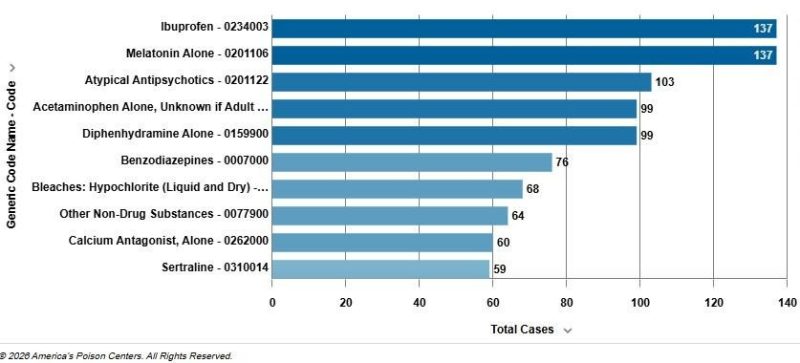
Figure 1. Mississippi Poison Center report on most common agents involved in first quarter 2026.
In the US, many public health departments conduct surveillance of non-fatal overdoses that include a biosurveillance component that involves mass spectrometric characterization of residual toxicology specimens from suspected drug overdoses (41). These programs rely on clinical toxicology laboratories to retain overdose-related specimens and forward them to public health laboratories for testing a wide range of substances not typically included in routine test panels. These biosurveillance data are submitted to the CDC monthly which, can direct public health intervention and is helpful for monitoring drug use trends in communities and even within hospital patient populations. Cooperation between EDs, their supporting toxicology laboratories, and public health laboratories is recommended for the success of drug biosurveillance programs.
Occasionally organizations work individually or in collaboration in order to identify and publish novel trends in drug abuse or intoxications. One recent collaboration involves the US Drug Enforcement Administration (DEA) with the Clinical Toxicology and Environmental Biomonitoring laboratory (CTEB) at the University of California-San Diego in which requests for analysis of patient specimens are submitted to the DEA and analysis is performed by the CTEB. Quarterly reports are provided on the DEA website (42) which list the drug classes, frequency of identification, location (state) and concentration. Another notable collaboration involves the Center for Forensic Science Research and Education (CFSRE) with NMS Labs who are working to analyze NPS involved in illicit drug investigations, death investigation and/or driving under the influence investigations (43). The project is funded by the National Institute of Justice and provides quarterly reports.
Recommendations:
- Laboratories should monitor relevant publications and/or online databases to stay abreast of relevant topics. These may include MMWR reports and others.
- Laboratories should work with their local/regional poison center to obtain weekly/monthly data on regional and national exposures.
- Laboratories should work with their state public health department to obtain periodic overdose reports and/or drug surveillance reports.
6. What responsibilities do laboratories have to stay up to date on potential sources of inaccuracy or performing their own studies?
Interferences in toxicology laboratory testing can impact clinical decisions and cause confusion or misdirect intervention protocols. These interferences can cause false-positive test results, false-negative test results, inaccurate quantitation or even cause the lab to be unable to report out a test result. In each of these situations, it is imperative that the lab and clinicians are fully aware and understand the possible causes of these interferences to ensure proper laboratory result interpretation and patient management (44). Laboratories should communicate to the clinicians any newly discovered interferences. Communications may include interpretive comments on patient reports, clinical decision support tools, educational sessions or conferences.
It is already a regulatory requirement for laboratories as part of their method validation evaluation to assess analytical specificity, specifically relevant interferences, and document those in their standard operating procedures (45). While FDA-approved tests already have this information included in the package inserts, laboratories should investigate any suspected interference that is not listed by the manufacturer. Sites utilizing laboratory developed tests are required to evaluate interferences during method validation. This should include potential interference from specimen containers. All laboratories should keep up to date with literature that involves unknown interferences.
Therefore, it is recommended that interfering substances from common sources must be evaluated in all screening, qualitative identification, and quantitative methods (46, 47). If an assay uses isotopically-labeled internal standards, it should be assessed for interference in the method as well as the presence of any non-labeled compound as an impurity since both analyte identification and/or quantification could be impacted. Other sources of potential interferences that should be evaluated include: commonly prescribed comedications, structurally similar compounds, or commonly used illicit substances. The analytical interference between co-administered medications is important and relies on communication between the lab and clinical colleagues to ensure that a comprehensive and appropriate list of comedications/drugs is tested (48). Examples include the interference of propylene glycol and propionic acid in some ethylene glycol assays. For FDA-approved tests, package insert cross-reactivity and analytical specificity should be evaluated as the concentrations or list of compounds tested may not adequately reflect the local patient population or practice. Additional compounds and/or higher concentrations may need to be tested, especially if the laboratory and ED teams notice a significant number of false-positive immunoassay test results which are not confirmed by definitive testing (examples fentanyl, buprenorphine, etc.). In addition, the effects of hemolysis, icterus, and lipemia on toxicology test results should also be assessed for potential interference. Lastly, any modifications to an analytical method should be evaluated to verify that the changes do not adversely affect the analytical performance. Significant changes to instrumentation, analytical software, specimen processing may require a full method revalidation to ensure patient safety. Even simple changes such as an extraction solvent or change in mobile phase gradient may affect assay sensitivity, specificity or interferences (46).
Recommendations:
- Potentially interfering substances must be evaluated for each analytical method. Candidates should be chosen from common sources of interference (hemolysis, icterus, lipemia), compounds with similar structures, as well as, those cited in scientific literature.
- Rigorous reevaluation of analytical interferences should be performed after any significant change to the specimen processing, analytical methodology, assay reagents, hardware, or software.
7. What quality expectations should be in place for testing that claims to provide unknown compound identifications where analytical standards or previous reports are lacking?
Screening for unknown compounds beyond those for which rapid assays are readily available has long been a mainstay of laboratory testing in support of EDs. Methodologies for performing broad-spectrum toxicology testing are shifting from gas chromatography with single-stage mass spectrometry (GC-MS) toward LC-MS/MS and, increasingly, various high-resolution mass spectrometry (HRMS) techniques. Often, such tests cannot be performed within an individual patient’s ED stay, and results may not impact emergency care even when they become available. However, they can inform later clinical care, patient counseling, toxicovigilance or toxicosurveillance, and public health efforts.
The analysis of nonbiological matrices such as tablets, powders, and liquids is out of scope for most clinical laboratories. Guidance for nonbiological materials is also out of the scope of this document. Laboratories can send nonbiological materials to reference/specialty or forensic laboratories for analysis. Clinical laboratories that analyze nonbiological materials often do so at the request of their ED or central pharmacy for materials found in patient’s possession or in the hospital. It is recognized that these services can provide information to help guide patient treatment or discharge, but the testing should be the decision of the laboratory director after consideration of all safety, accreditation, and legal issues. Appropriate measures such as personal protective equipment, biosafety and chemical safety protocols should be used to protect staff and avoid contamination of equipment. Every substance should be considered potentially lethal and laboratories should adhere to all applicable laws regarding handling, possession, and disposal of controlled substances. Laboratories choosing to perform nonbiological analyses may consider contacting forensic or specialty laboratories for method validation recommendations or drug extraction protocols from complex matrices. The remainder of this section will address quality expectations and compound identification in biological matrices.
Testing for unknown toxicants can encompass identification of compounds that are entirely new to the medical community, such as emerging NPS or compounds that are known but new to the performing laboratory. For the purposes of this document, these two categories will be considered collectively. Inaccessible or nonexistent reference materials, poorly-understood metabolism, physiological concentrations in each matrix, and undefined analytical characteristics are all potential issues facing laboratories that perform unknown compound identification. It is essential for laboratories to develop procedures for the recognition of unknowns that are not characterized in their assays, perform initial attempts to identify (e.g., against an external library), and define acceptance criteria for result reporting.
Criteria for validation, calibration and control of the analytical methodologies listed above, as well as guidance on result interpretation and compound identification, are available from authorities such as the Clinical and Laboratory Standards Institute (CLSI) (49), American Academy of Forensic Sciences (AAFS) (46, 50), United Kingdom and Ireland Association of Forensic Toxicologists (UKIAFT)(51), and others. It is important to note that these documents largely focus on identification of previously-validated compounds, generally in reference to a standard material of known identity and quality. Unfortunately, there is less guidance available for laboratories attempting to identify compounds in the absence of a reference standard. As most existing guidance documents are targeted toward forensic testing, clinical laboratories supporting EDs may not require the same stringency for analysis and reporting.
Test performance: general considerations
Many existing best practices still apply to newer methodologies and novel compounds, such as including quality controls to evaluate all processes (e.g., extraction, derivatization) and to target the lower threshold of instrument performance. All steps taken to evaluate samples and report results should be documented, especially if suspect identification of a clinically relevant toxicological compound requires reporting despite incomplete validation or lack of a reference standard. When initial results suggest presence of a novel compound, repeat analysis with a second aliquot is advisable to reduce risk of contamination or sample mix-up (51).
Guidelines recommend testing with a second methodology for non-certified reference materials or when there is doubt about a compound’s identity. The second method can be a distinct mass spectrometry platform (e.g., confirming HRMS results on a targeted LC-MS/MS) or entirely different instrumentation (e.g., nuclear magnetic resonance or Fourier transform infrared spectroscopy) (51, 52). The AAFS provides a point-based framework for ensuring confidence in compound identification; although access to complementary methodologies might be limited for many laboratories, the point system indicates the relative utility of available techniques in identifying non-targeted compounds.
HRMS permits identifying compounds by their accurate or exact mass. In contrast to low-resolution systems that can separate compounds with unit resolution (1 m/z), HRMS can resolve compounds by parts-per-million differences, for example distinguishing morphine (C17H19NO3, 285.3377) from 7-aminoclonazepam (C15H12ClNO3, 285.7283) by mass alone. For unknown screening, selection of allowable mass error has an impact on compound identification; 5 ppm is a commonly used threshold, but laboratories should validate settings using known positive and negative samples (53).
Test performance: library matching
Full scan spectra can be compared against internally-developed and/or external compound libraries, although commutability of libraries for LC-based platforms is generally quite limited. While GC-MS libraries allow straightforward comparisons across platforms, LC-MS/MS and HRMS libraries are affected by the analytical parameters used in their development. When comparing an unknown spectrum against internal or external libraries, laboratories should set a minimum match factor for considering potential identification of a compound; the match factor should not be the sole criterion for determining identity even when it approaches 100% (50, 51). Additional analytical criteria to consider when evaluating compound identity include retention time, isotope pattern, accurate mass, and/or fragmentation pattern, depending on the instrumentation in use (18). For HRMS, there is currently no consensus on the appropriate minimum match factor; several publications have explored match factor thresholds in conjunction with other identification parameters on various systems (54-56).
Testing on any mass spectrometry platform must include the consideration of isobaric compounds, whether at low resolution (same nominal mass, different exact masses) or high resolution (same chemical composition, different structures). This is particularly relevant for novel substances that can be positional isomers of existing compounds (51). Fragmentation patterns and/or retention time can potentially be used to distinguish positional isomers.
Testing involving fragmentation (e.g., MS/MS, MSn) should include evaluation of the molecular ion or dominant mass transition, plus a minimum of two additional ions or mass transitions. Ions evaluated should be characteristic whenever possible, avoiding nonspecific changes such as loss of water unless validated and unavoidable. Acceptable variability in relative intensities differs by methodology; the above guidelines outline concentration-dependent criteria for common platforms. Examination by an experienced reviewer should confirm presence of all major expected ions and investigation of any unexpected ones.
Reporting and follow-up
The decision whether to report suspected presence of a non-validated compound must include consideration of the potential impact, both on clinical management of the patient and on risks associated with analytical error. Emergency care rarely relies on identification of a specific toxic substance, thus there is generally time for additional testing and confirmation prior to reporting. However, clusters of ED presentations following a toxic exposure or emergence of an NPS do occur, creating some pressure to provide at least tentative identification in some settings.
Results reported outside of validated analytical performance should be accompanied by careful explanation of the limitations of such a report. Compound identification should be clearly noted as ‘preliminary’, ‘presumptive’, or similar distinction from definitive results, regardless of the methodology used. This may involve compounds identified only by a library match without retention time, isotopic score, or other analytical data normally documented during method validation. Clinical providers are increasingly aware of the use of mass spectrometry in clinical laboratories, and often regard it as a gold standard. This belief in mass spectrometry as a definitive technology can be potentially harmful if laboratories choose to report a suspect compound before full validation is performed with analytical reference materials.
The identification of metabolites can strengthen analytical confidence during identification (53). However, particularly in urine, a compound may be detectable predominantly or solely as one or more metabolites. This is a significant challenge for relatively novel compounds where metabolic patterns might not be fully elucidated, and for which reference standards might be lacking. Online resources exist for predicting compound metabolism; any use of such tools to inform resulting should be carefully documented and described in the patient report.
If reference standards are not on hand for confirmation at the time of analysis, laboratories should acquire them for comparison against the novel compounds reported. Standards should be analyzed using the same extraction and instrument parameters as the specimen(s), ideally in a single batch. Alternatively, laboratories can send stored specimens to a reference laboratory once testing becomes available.
Distinguishing whether low concentrations of signal are clinically meaningful is a particular challenge with modern technology, as current instrumentation can detect compounds below clinically important thresholds. With qualitative analyses, a ‘how low can you go’ strategy may not be best as it could distract clinical providers with compounds that are below the level of toxicological relevance. Reporting compounds with low signal intensity can also increase the risk of reporting a false positive result. Laboratories should evaluate their detection limits even when reporting qualitatively. Semi-quantitative approaches might avoid reporting meaningless low results, e.g., evaluating the signal of a detected compound against that of a known internal standard.
Recommendations:
- Laboratories should follow best practices such as including quality controls through all processes and the inclusion of appropriate internal standards in analytical procedures.
- For compound identification, laboratories should not rely on mass spectrometry match criteria alone, but should also include retention time, isotope pattern, accurate mass, fragmentation pattern and other criteria whenever possible. Isobaric compounds should also be considered.
- Laboratories should seek to use a second and different analytical method when uncertain about analyte identity and should seek to use a different specimen aliquot to reduce the risk of contamination.
- Laboratories using high resolution mass spectrometry should strive to use 5 ppm as a threshold and should validate their identification criteria using known positive and negative samples.
- Laboratories must consider potential impact and outcomes before reporting suspected presence of a non-validated compound. Reporting should be clearly noted as ‘preliminary’, ‘presumptive’ or similar distinction from definitive results.
8. What new and emerging biomarkers are of interest and why?
Liver injury is a common finding in xenobiotic exposures as the liver is particularly sensitive to injury due to its role in first pass metabolism. The classic biomarkers of liver injury include alanine aminotransferase (ALT), aspartate aminotransferase (AST), and alkaline phosphatase, whereas, prothrombin time (PT) with international normalized ratio (INR) can be a useful marker of liver function. Emerging biomarkers are often categorized as either a) markers of injury or b) markers of recovery. Potential candidates include high mobility group box 1 (HMGB1), microRNA miR-122, cytokeratin K18, glutamate dehydrogenase (GLDH), mitochondrial DNA, long-chain acyl carnitines, sorbitol dehydrogenase and glutathione S-transferase, alpha-fetoprotein, and osteopontin. Despite the growing number of publications including these and other potential biomarkers, challenges involving organ specificity, intra and interindividual variability, and analyte measurement must be overcome before their adoption. Therefore, we look forward to the development of sensitive and specific biomarkers that may include small molecules, RNA, enzymes, proteins, and other classes of biological molecules.
Recommendations:
- Laboratories should stay abreast of developing biomarkers as well as recommendations for their use/implementation from national societies and workgroups. Laboratory directors should communicate with relevant clinical groups regarding needs, implementation, and use of new biomarkers.
9. What new technologies are of interest for impacting existing unmet needs or addressing the tiered structure restrictions?
Laboratory testing is often cited as having considerable impact on patient diagnosis and outcomes; however, for ED encounters this utility can be limited due to lengthy result turnaround times. The literature surrounding test utilization in the ED cites short turnaround times and high efficiency as key factors for clinical efficacy (57). As a result, new technologies that cannot be conducted within 1 to 2 hours will have limited value for decision making and patient management (58). Much of the focus around improving access to testing in the ED has focused on novel point-of-care technology in the form of handheld devices. The devices for toxicology applications often use affinity-based methods and exhibit inadequate analyte specificity than that required for clinical decision making (59). As these technologies continue to develop, the promise of platforms integrating rapid and simple testing continues to be an area of interest (60, 61).
Mass spectrometry has proved valuable for toxicological testing with numerous articles highlighting its utility (62). One area of continued development involves ambient ionization techniques that promise to provide a direct analysis of samples with little to no sample preparation (63). These techniques have been used to analyze traditional matrices as well as novel matrices such as gastric lavage fluid, blood, pill fragments, skin contaminants and oral fluid (64). Ambient ionization and other mass spectrometric methods are anticipated to challenge the centralized laboratory model in the next decade (65) as the miniaturization and automation of mass spectrometry (66) continues to evolve.
Laboratories are increasingly adopting HRMS into clinical use (53). While its cost and complexity may inhibit universal adoption, HRMS does provide increased specificity compared to targeted, tandem mass spectrometry (MS/MS) methods. A distinct advantage of HRMS is the ability to provide targeted testing (i.e., a defined list of substances) as well as untargeted testing (i.e. no a priori knowledge of substances present) in the same sample (67). Instruments marketed with onboard drug/compound libraries and pre-programmed analytical methods would be highly desirable to laboratories. Comprehensive non-targeted analysis available quickly enough for the ED’s needs could be very impactful for laboratory testing and patient care.
The broad online availability of medical information has resulted in patient empowerment (68). When properly curated and overseen, online resources such as webPOISONCONTROL (69) can provide lifesaving information and can potentially reduce unnecessary burdens on poison control centers and emergency departments. webPOISONCONTROL is powered by more than 1,200 ingredient-specific algorithms used to triage and prompt individuals to a) stay at home, b) call poison control, or c) go to an emergency department (70). In parallel, the development and integration of physician-oriented digital tools offering access to national and international databases with near real-time drug trend data could enhance clinical decision-making and preparedness. Physicians are frequently challenged by the dynamic nature of substance use trends, including the emergence of NPS and synthetic analogs. The availability of up-to-date geographically tagged drug use and detection data would enable clinicians to anticipate and recognize evolving toxicologic presentations before they reach their specific local. As drug use patterns often follow identifiable geographic trajectories, early access to this information could serve as an early warning system, allowing clinicians to remain vigilant for specific toxidromes, make informed differential diagnoses, and implement timely interventions. Furthermore, coupling these data with case-based clinical insights or syndromic alerts would facilitate knowledge dissemination and improve readiness across emergency and primary care settings. Ultimately, the integration of real-time surveillance data into clinical workflows, such as Electronic Medical Record programs, represents an important evolution in the practice of medical toxicology and emergency medicine.
Microfluidics enables test miniaturization and reduced reagent consumption. Contemporary 3D printing ushered in an era of screen-printed electrodes incorporated into point of care or wearable devices referred to as biosensors. Some allow near real-time sensitive detection of compounds, drugs, heavy metals (71) or metabolites (72) in biological fluids such as sweat and oral fluid with sensitivity down to 0.1 ng/mL of sweat (73).
Lastly, the extension of artificial intelligence and machine learning into medicine is a contentious and rapidly developing field that has the potential to provide integrated and elegant clinical decision-making even in the absence of onsite expertise (74-76). Artificial intelligence and machine learning technology could be applied to test selection and to the interpretation of multidimensional test results. Likelihood scores could be used to identify risk for diseases and provide probability scores, based on patients with similar demographics and lab-test profiles from a large population. We anticipate rapid developments in this field and look forward to its potential applications in toxic overdoses.
Conclusions
These recommendations are intended to serve as a baseline for testing and a framework for discussion between laboratorians and ED clinicians. The two groups should work together to structure test menus to best meet the needs of their patient population. Laboratories should utilize best practices during test development and validation to ensure high-quality patient results and should consider potential outcomes before reporting the suspected presence of a non-validated compound. Laboratorians should seek to stay informed on current toxicology trends and should provide their ED clinicians updates on regional and/or national trends or outbreaks. Essentially, there should be a continuum of communication between the laboratory and the ED so that lab directors can educate clinical providers on test recommendations/limitations and so that ED providers have direct line of contact with the laboratory director for questions and needs.
Footnote: Portions of these recommendations were presented at the 2025 Association for Diagnostics and Laboratory Medicine – Annual Scientific Meeting in Chicago, IL.
References
1. Snozek CLH, Krasowski MD, Colby JM, Johnson-Davis KL, Bruccoleri RE, Melanson SE. Adlm guidance document on laboratory testing for drugs of misuse to support the emergency department. J Appl Lab Med 2026;11:1:155-80 doi: 10.1093/jalm/jfaf172.
2. Beuhler MC, Feldman R, Gummin DD, Mowry JB, Rivers LJ, Brown K, et al. 2024 annual report of the national poison data system (NPDS) from america's poison centers: 42nd annual report. Clin Toxicol (Phila) 2025;63:12:1029-1280. Epub 20251223 doi: 10.1080/15563650.2025.2571299.
3. DAWN. Drug abuse warning network: National estimates from drug-related emergency department visits 2023. Hhs publication pep 24-07-033. . https://www.samhsa.gov/data/sites/default/files/reports/rpt53161/dawn-national-estimates-2023.pdf (Accessed 2025 March 21).
4. Kyle PB, Scott D, Garg U. Drugs detected in suspected pediatric exposures: A 5-year review. Clin Toxicol (Phila) 2026;64:5:363-7. Epub 20260203 doi: 10.1080/15563650.2026.2613029.
5. CDC. Accidents or unintentional injuries. https://www.cdc.gov/nchs/fastats/accidental-injury.htm (Accessed 24 June 2025).
6. Garnett MF MA. Drug overdose deaths in the united states, 2003–2023. https://stacks.cdc.gov/view/cdc/170565 (Accessed 11 May 2026).
7. DAWN. Drug abuse warning network (dawn) short report / drug-related ed visits involving suicide attempts. https://www.samhsa.gov/data/sites/default/files/reports/rpt42709/ShortReport-EDVisits-SuicideAttempt.pdf (Accessed 4 April, 2026).
8. Spencer MR CJ, Warner M, Garnett MF. Drug overdose deaths involving xylazine: United states, 2018-2021. https://www.cdc.gov/nchs/data/vsrr/vsrr030.pdf (Accessed 12 May 2026).
9. Gupta R, Holtgrave DR, Ashburn MA. Xylazine - medical and public health imperatives. N Engl J Med 2023;388:24:2209-12. Epub 20230426 doi: 10.1056/NEJMp2303120.
10. Adams AJ, Banister SD, Irizarry L, Trecki J, Schwartz M, Gerona R. "Zombie" outbreak caused by the synthetic cannabinoid amb-fubinaca in new york. N Engl J Med 2017;376:3:235-42. Epub 20161214 doi: 10.1056/NEJMoa1610300.
11. Kasper AM, Ridpath AD, Arnold JK, Chatham-Stephens K, Morrison M, Olayinka O, et al. Severe illness associated with reported use of synthetic cannabinoids - mississippi, april 2015. MMWR Morb Mortal Wkly Rep 2015;64:39:1121-2. Epub 20151009 doi: 10.15585/mmwr.mm6439a7.
12. Bechtel L, Holstege CP. Utilizing the toxicology laboratory in the poisoned patient. Emerg Med Clin North Am 2022;40:2:431-41 doi: 10.1016/j.emc.2022.01.003.
13. Wu AH, McKay C, Broussard LA, Hoffman RS, Kwong TC, Moyer TP, et al. National academy of clinical biochemistry laboratory medicine practice guidelines: Recommendations for the use of laboratory tests to support poisoned patients who present to the emergency department. Clin Chem 2003;49:3:357-79 doi: 10.1373/49.3.357.
14. Thompson JP, Watson ID, Thanacoody HK, Morley S, Thomas SH, Eddleston M, et al. Guidelines for laboratory analyses for poisoned patients in the united kingdom. Ann Clin Biochem 2014;51:Pt 3:312-25 doi: 10.1177/0004563213519754.
15. Allen DR, McWhinney BC. Quadrupole time-of-flight mass spectrometry: A paradigm shift in toxicology screening applications. Clin Biochem Rev 2019;40:3:135-46 doi: 10.33176/AACB-19-00023.
16. Kyle PB. Laboratory methods in toxicology. In: Ketha HK GU, editor. Toxicology cases for the clinical and forensic laboratory. London: Academic Press; 2020. p. 19-26.
17. Lee S, Lee J, Jang D, Cho HJ, Choi S, Ryu E, et al. Simultaneous analysis of 203 drugs of abuse and metabolites in urine samples using liquid chromatography-tandem mass spectrometry. J Chromatogr B Analyt Technol Biomed Life Sci 2025;1256:124524. Epub 20250221 doi: 10.1016/j.jchromb.2025.124524.
18. Van Wijk XMR, Goodnough R, Colby JM. Mass spectrometry in emergency toxicology: Current state and future applications. Crit Rev Clin Lab Sci 2019;56:4:225-38 doi: 10.1080/10408363.2019.1585415.
19. Garg U ST, Gaedigk A. Pediatric therapeutic drug monitoring, toxicology and pharmacogenomics. In: Dietzen D WE, Bennett M, Haymond S, editor. Biochemical and molecular basis of pediatric disease, 5th ed. London: Academic Press; 2021. p. 849-908.
20. Fisher S CS. Evaluation and treatment of acetaminophen toxicity. In: Ramachandran A JH, editor. Advances in pharmacology: Drug-induced liver injury. London: Academic Press; 2019. p. 263-72.
21. Britch SC, Walsh SL. Treatment of opioid overdose: Current approaches and recent advances. Psychopharmacology (Berl) 2022;239:7:2063-81. Epub 20220407 doi: 10.1007/s00213-022-06125-5.
22. Garg U CM. Emergency and intensive care management for acute poisonings and toxicities. In: Choudhuri AH DB, editor. Interpreting laboratory tests in intensive care. Boca Raton, FL: CRC Press; 2024.
23. Liberski S, Kaluzny BJ, Kociecki J. Methanol-induced optic neuropathy: A still-present problem. Arch Toxicol 2022;96:2:431-51. Epub 20220106 doi: 10.1007/s00204-021-03202-0.
24. Raub JA, Mathieu-Nolf M, Hampson NB, Thom SR. Carbon monoxide poisoning--a public health perspective. Toxicology 2000;145:1:1-14 doi: 10.1016/s0300-483x(99)00217-6.
25. Jomova K, Alomar SY, Nepovimova E, Kuca K, Valko M. Heavy metals: Toxicity and human health effects. Arch Toxicol 2025;99:1:153-209. Epub 20241120 doi: 10.1007/s00204-024-03903-2.
26. CDC. Recommended actions based on blood lead level. https://www.cdc.gov/lead-prevention/hcp/clinical-guidance/index.html .
27. Lynch KL. A case series evaluation of comprehensive drug testing in the pediatric acute care setting. J Mass Spectrom Adv Clin Lab 2023;28:75-9. Epub 20230302 doi: 10.1016/j.jmsacl.2023.02.011.
28. Meyer GM, Weber AA, Maurer HH. Development and validation of a fast and simple multi-analyte procedure for quantification of 40 drugs relevant to emergency toxicology using gc-ms and one-point calibration. Drug Test Anal 2014;6:5:472-81. Epub 20130924 doi: 10.1002/dta.1555.
29. Ramoo B, Funke M, Frazee C, Garg U. Comprehensive urine drug screen by gas chromatography/mass spectrometry (gc/ms). Methods Mol Biol 2016;1383:125-31 doi: 10.1007/978-1-4939-3252-8_15.
30. Tesfazghi MT, Bardelmeier R, Saunders AN, Riley SM, Roper SM, Dietzen DJ. Development and implementation of one-step, broad-spectrum, high-sensitivity drug screening by tandem mass spectrometry in a pediatric population. J Appl Lab Med 2022;7:2:409-20 doi: 10.1093/jalm/jfab157.
31. Cruz AT. Indications and interpretation of common laboratory assays in the emergency department. Pediatr Clin North Am 2018;65:6:1191-204 doi: 10.1016/j.pcl.2018.07.005.
32. Li L, Georgiou A, Vecellio E, Eigenstetter A, Toouli G, Wilson R, et al. The effect of laboratory testing on emergency department length of stay: A multihospital longitudinal study applying a cross-classified random-effect modeling approach. Acad Emerg Med 2015;22:1:38-46 doi: 10.1111/acem.12565.
33. Scientific working group for forensic toxicology (swgtox) standard for laboratory personnel. Journal of Analytical Toxicology 2015;39:3:241-50 doi: 10.1093/jat/bku125.
34. Ali K, Chiang W, Wang JJ. On the analytic characteristics of commercial acetaminophen assays in the united states. J Appl Lab Med 2022;7:6:1311-7 doi: 10.1093/jalm/jfac059.
35. Delaney SR, Tacker DH, Snozek CLH. The north american opioid epidemic: Opportunities and challenges for clinical laboratories. Crit Rev Clin Lab Sci 2022;59:5:309-31. Epub 20220215 doi: 10.1080/10408363.2022.2037122.
36. Melanson SE, Ptolemy AS, Wasan AD. Optimizing urine drug testing for monitoring medication compliance in pain management. Pain Med 2013;14:12:1813-20. Epub 20130730 doi: 10.1111/pme.12207.
37. Tacker DH, Adelanwa A, Pearson N, Marshalek P, Berry JH. Fentanyl quality assurance project prompted change in clinical workflow and test configurations. J Appl Lab Med 2021;6:1:93-100 doi: 10.1093/jalm/jfaa173.
38. Sangal RB, Venkatesh AK, Cahill J, Pettker CM, Peaper DR. Choice architecture to assist clinicians with appropriate covid-19 test ordering. J Appl Lab Med 2023;8:1:98-105 doi: 10.1093/jalm/jfac104.
39. CDC. Morbidity and mortality weekly report (mmwr). https://www.cdc.gov/mmwr/ (Accessed 12 May 2026).
40. NPDS. Mississippi poison control center, america’s poison centers. https://poisoncenters.org/national-poison-data-system (Accessed 12 May 2026).
41. APHL. Assessing polysubstance overdoses: An expanded biosurveillance strategy for public health practice. https://aphl.org/docs/default-source/technical/eh-expanded-polysubstance-overdose-biosurveillance.pdf?sfvrsn=f501eab4_1 (Accessed 12 May 2026).
42. DEA. Dea tox toxicology testing program. https://www.deadiversion.usdoj.gov/dea_tox/dea-tox.html (Accessed 12 May 2026).
43. CFRSE. Nps discovery. https://www.cfsre.org/nps-discovery (Accessed 2025 March 11).
44. Smith MP, Bluth MH. Common interferences in drug testing. Clin Lab Med 2016;36:4:663-71 doi: 10.1016/j.cll.2016.07.006.
45. CAP. College of american pathologists, council on accreditation. Forensic drug testing checklist. December 26, 2024 ed. Northfield, il: College of american pathologists. 2024.
46. ANSI/ASB. Ansi/asb standard 036: Standard practices for method validation in forensic toxicology Colorado Springs, CO: AAFS Standards Board; 2019.
47. Scientific Working Group for Forensic T. Scientific working group for forensic toxicology (swgtox) standard practices for method validation in forensic toxicology. J Anal Toxicol 2013;37:7:452-74 doi: 10.1093/jat/bkt054.
48. Galteau MM, Siest G. Drug effects in clinical chemistry. Part 2. Guidelines for evaluation of analytical interference. J Clin Chem Clin Biochem 1984;22:3:275-9.
49. CLSI. Gas chromatography/mass spectrometry confirmation of drugs; approved guideline - 2nd edition. Clsi document c43-a2. Wayne, PA: Clinical and Laboratory Standards Institute; 2010.
50. ANSI/ASB. Ansi/asb standard 113: Standard for identification criteria in forensic toxicology. Colorado Springs, CO: AAFS Standards Board; 2023.
51. Elliott SP, Stephen DWS, Paterson S. The united kingdom and ireland association of forensic toxicologists forensic toxicology laboratory guidelines (2018). Sci Justice 2018;58:5:335-45. Epub 20180504 doi: 10.1016/j.scijus.2018.05.004.
52. ANSI/ASB. Ansi/asb standard 054: Standard for a quality control program in forensic toxicology laboratories. Colorado Springs, CO: AAFS Standards Board; 2021.
53. Maurer HH. Hyphenated high-resolution mass spectrometry-the "all-in-one" device in analytical toxicology? Anal Bioanal Chem 2021;413:9:2303-9. Epub 20201128 doi: 10.1007/s00216-020-03064-y.
54. Andrenyak DM, Moody DE, Slawson MH, O'Leary DS, Haney M. Determination of ∆-9-tetrahydrocannabinol (thc), 11-hydroxy-thc, 11-nor-9-carboxy-thc and cannabidiol in human plasma using gas chromatography-tandem mass spectrometry. J Anal Toxicol 2017;41:4:277-88 doi: 10.1093/jat/bkw136.
55. Chindarkar NS, Wakefield MR, Stone JA, Fitzgerald RL. Liquid chromatography high-resolution tof analysis: Investigation of mse for broad-spectrum drug screening. Clin Chem 2014;60:8:1115-25. Epub 20140610 doi: 10.1373/clinchem.2014.222976.
56. Hill SL, Dunn M, Cano C, Harnor SJ, Hardcastle IR, Grundlingh J, et al. Human toxicity caused by indole and indazole carboxylate synthetic cannabinoid receptor agonists: From horizon scanning to notification. Clin Chem 2018;64:2:346-54. Epub 20171016 doi: 10.1373/clinchem.2017.275867.
57. van de Wijngaart DJ, Scherrenburg J, van den Broek L, van Dijk N, Janssens PMW. A survey of doctors reveals that few laboratory tests are of primary importance at the emergency department. Diagnosis (Berl) 2014;1:3:239-44 doi: 10.1515/dx-2014-0025.
58. Guarner J, Jenkins KM, Franks NM. Successful and unsuccessful point-of-care testing in the emergency room. Am J Clin Pathol 2018;150:3:190-2 doi: 10.1093/ajcp/aqy079.
59. Hoofnagle AN, Wener MH. The fundamental flaws of immunoassays and potential solutions using tandem mass spectrometry. J Immunol Methods 2009;347:1-2:3-11. Epub 20090616 doi: 10.1016/j.jim.2009.06.003.
60. Alkhamis O, Canoura J, Wu Y, Emmons NA, Wang Y, Honeywell KM, et al. High-affinity aptamers for in vitro and in vivo cocaine sensing. J Am Chem Soc 2024;146:5:3230-40. Epub 20240126 doi: 10.1021/jacs.3c11350.
61. Canoura J, Liu Y, Alkhamis O, Xiao Y. Aptamer-based fentanyl detection in biological fluids. Anal Chem 2023;95:49:18258-67. Epub 20231130 doi: 10.1021/acs.analchem.3c04104.
62. Mbughuni MM, Jannetto PJ, Langman LJ. Mass spectrometry applications for toxicology. EJIFCC 2016;27:4:272-87. Epub 20161201.
63. Lee CW, Su H, Hsu YW, Su LZ, Wu YH, Hou CY, et al. Rapid characterization of undeclared pharmaceuticals in herbal preparations by ambient ionization mass spectrometry for emergency care. J Am Soc Mass Spectrom 2024;35:5:960-71. Epub 20240414 doi: 10.1021/jasms.4c00016.
64. Lee CW, Su H, Lee RH, Lin YP, Tsai YD, Wu DC, et al. Point-of-care identification of organophosphates in gastric juice by ambient mass spectrometry in emergency settings. Clin Chim Acta 2018;485:288-97. Epub 20180703 doi: 10.1016/j.cca.2018.07.002.
65. Li LH, Hsieh HY, Hsu CC. Clinical application of ambient ionization mass spectrometry. Mass Spectrom (Tokyo) 2017;6:Spec Iss:S0060. Epub 20170224 doi: 10.5702/massspectrometry.S0060.
66. Junger S, Hoene M, Shipkova M, Danzl G, Schoberl C, Peter A, et al. Automated lc-ms/ms: Ready for the clinical routine laboratory? J Mass Spectrom Adv Clin Lab 2023;30:1-9. Epub 20230802 doi: 10.1016/j.jmsacl.2023.07.001.
67. Pezzatti J, Gonzalez-Ruiz V, Boccard J, Guillarme D, Rudaz S. Evaluation of different tandem ms acquisition modes to support metabolite annotation in human plasma using ultra high-performance liquid chromatography high-resolution mass spectrometry for untargeted metabolomics. Metabolites 2020;10:11. Epub 20201115 doi: 10.3390/metabo10110464.
68. Shajahan A, Pasquetto IV. Countering medical misinformation online and in the clinic. Am Fam Physician 2022;106:2:124-5.
69. Webpoisoncontrol. https://www.webpoisoncontrol.org/ (Accessed 12 May 2026).
70. Litovitz T, Benson BE, Smolinske S. Webpoisoncontrol: Can poison control be automated? Am J Emerg Med 2016;34:8:1614-9. Epub 20160607 doi: 10.1016/j.ajem.2016.06.018.
71. Karthik V, Karuna B, Kumar PS, Saravanan A, Hemavathy RV. Development of lab-on-chip biosensor for the detection of toxic heavy metals: A review. Chemosphere 2022;299:134427. Epub 20220329 doi: 10.1016/j.chemosphere.2022.134427.
72. Liu Z, Li J, Li J, Yang T, Zhang Z, Wu H, et al. Explainable deep-learning-assisted sweat assessment via a programmable colorimetric chip. Anal Chem 2022;94:45:15864-72. Epub 20221101 doi: 10.1021/acs.analchem.2c03927.
73. Wang Y, Wu X, Liu Y, Zhang J, Wang L, Luo X. A wearable platform for biochemical sweat analysis using photonic crystal hydrogel. Anal Chim Acta 2025;1338:343590. Epub 20241225 doi: 10.1016/j.aca.2024.343590.
74. Behnoush B, Bazmi E, Nazari SH, Khodakarim S, Looha MA, Soori H. Machine learning algorithms to predict seizure due to acute tramadol poisoning. Hum Exp Toxicol 2021;40:8:1225-33. Epub 20210204 doi: 10.1177/0960327121991910.
75. Mehrpour O, Saeedi F, Abdollahi J, Amirabadizadeh A, Goss F. The value of machine learning for prognosis prediction of diphenhydramine exposure: National analysis of 50,000 patients in the united states. J Res Med Sci 2023;28:49. Epub 20230612 doi: 10.4103/jrms.jrms_602_22.
76. Mehrpour O, Saeedi F, Vohra V, Hoyte C. Outcome prediction of methadone poisoning in the united states: Implications of machine learning in the national poison data system (npds). Drug Chem Toxicol 2024;47:5:556-63. Epub 20231109 doi: 10.1080/01480545.2023.2277128.